TekRevol didn’t just build a tool; they engineered a safe, human-centric gateway to care. Their discipline in wrapping my AI vision in enterprise-grade architecture made Elara production-ready and provably reliable.
Enterprise Case Study
Next-Gen Healthcare Efficiency Powered by Agentic AI
TekRevol engineered Elara, a production-grade Agentic AI health companion that translates free-text symptoms into clinical action, from triage to provider matching, automated booking, and payment, without ever crossing the line into diagnosis.
Client
Elara · AI-Powered HealthTech
Agentic AI Architecture
Eight loosely coupled subsystems. Zero compromise on clinical safety. Enterprise-grade transactional integrity.

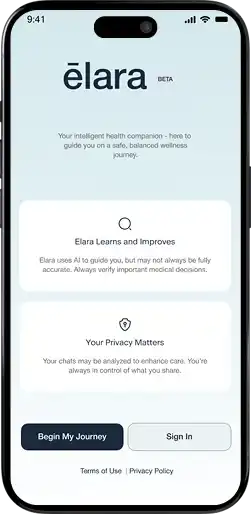
Elara Platform, Live ArchitectureProduction
AI Chat OrchestratorClaude · Dual-Output Prompting
Vector Memory ServiceEmbeddings · Cosine Retrieval
Emergency Safety BarrierPre-AI Classifier · Escalation
Medical Records ServiceDiagnoses · Medications · Allergies
Doctor Matching EngineHybrid AI + Deterministic Scoring
Booking & Scheduling ServiceState Machine · Slot Management
Payment ServiceWebhook-Driven · Idempotent Handlers
Notification WorkerPush · Email · Async Queue
A Founder Rebuilding the Front Door of Healthcare
Claudia Pezzola, founder of a Dubai-based HealthTech startup operating in stealth mode since February 2025, is redefining medical access. Driven by the conviction that patients shouldn't need a medical vocabulary to find care, she leads global teams across AI, UX, and clinical integration to build Elara, a production-grade care marketplace.
Traditional platforms force users to translate symptoms into clinical specialties; Elara inverts this model. Using Agentic AI, it allows patients to describe issues in plain language, orchestrating the entire journey from triage to doctor matching and automated payment.
TekRevol served as the end-to-end engineering partner, transforming this vision into a production-ready system where complex backend operations seamlessly meet enterprise-grade standards.
Founder
Claudia Pezzola
Sector
AI-Powered HealthTech · Stealth Startup
Location
Dubai, United Arab Emirates
Platform Name
Elara
Engagement
End-to-End Product Engineering with TekRevol
Operating Model
Stealth · February 2025 – Present
User Classes
Patients (Authenticated & Guest), Healthcare Providers, Admins
Core AI
Claude (Anthropic) · Dual-Output Prompting · Vector Memory
Operational Scope
Multi-subsystem Agentic care orchestration covering triage, matching, booking, payment, and post-appointment engagement
Challenges
Where Healthcare Meets Generative AI
Before Elara, patients were expected to do the hard diagnostic work themselves, translating vague pain, fatigue, and anxiety into clinical specialties before a platform would even acknowledge their problem.
These weren't just product gaps. They were structural clinical risks, hallucination exposure, broken transactional states, privacy leakage, and a user experience built on a foundation generative AI alone cannot hold.


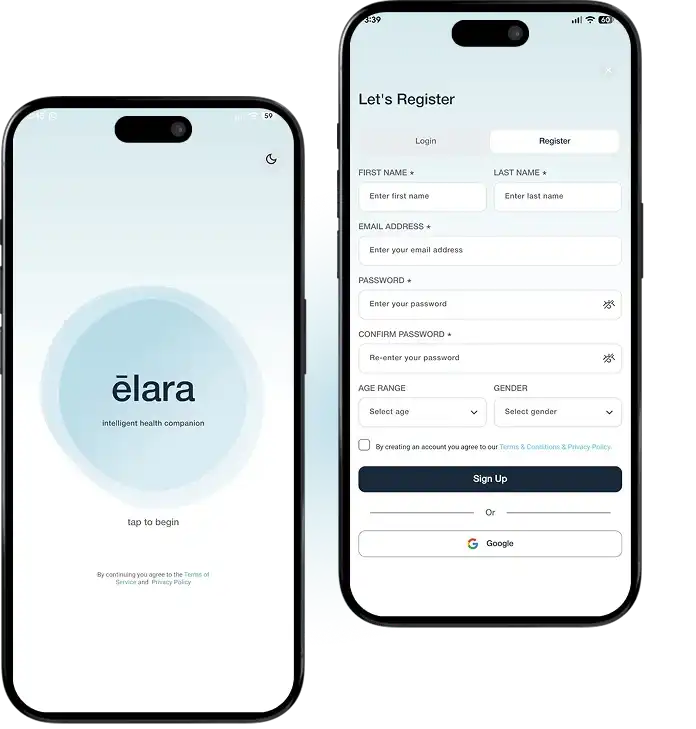
SOLUTIONS
Agentic AI Architecture. Built for Clinical Accountability
TekRevol designed Elara not as a chatbot, but as a coordinated state machine in which an AI conversation feeds deterministic workflows for scheduling, payment, and care coordination. The chat subsystem orchestrates; every transactional concern, medical records, scheduling, booking, payments, notifications, lives in a dedicated service with its own contract.
Every user message passes through an eleven-step authoritative lifecycle, from session identification and a pre-AI safety barrier, through vector context retrieval and Claude invocation, to structured metadata persistence and final payload assembly. Operational boundaries are enforced through structured prompts, not fine-tuned models, so tone, safety, and clinical pacing can be iterated in hours, not retraining cycles.


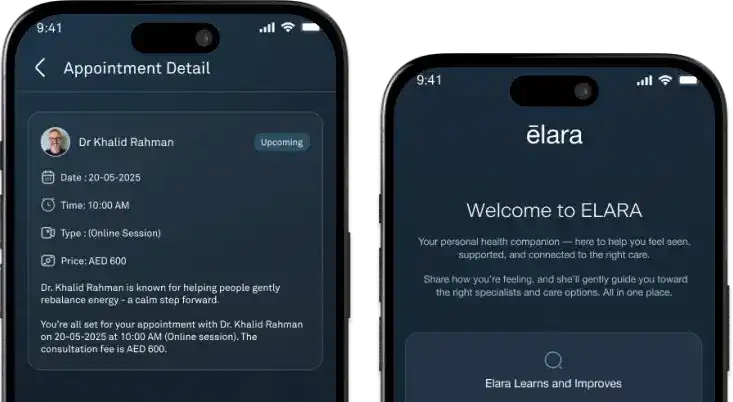
Claude handles conversation and interpretation; deterministic engines own scheduling, booking, payment, and doctor matching, so every transactional outcome is reproducible and auditable.
A pre-processing emergency classifier sits upstream of every LLM call. Critical signals, cardiac symptoms, suicidal ideation, stroke indicators, short-circuit the AI pipeline entirely, returning a clinically-approved static response before Claude is ever invoked.
Operational boundaries, clinical register, zero diagnostic language, soft response limits, emergency override logic, are enforced through structured prompts, not fine-tuned weights. This allows TekRevol to iterate on tone, safety, and clinical pacing in hours, not retraining cycles.
A vector database indexes every conversation turn, medical record snippet, and clinical knowledge fragment. Semantically relevant context is retrieved via cosine similarity and injected into each Claude call. Embedding generation runs asynchronously off the chat path, memory cost stays linear, chat latency is unaffected.
Client-side payment confirmations are never trusted. Booking state advances to confirmed only on a signed webhook from the payment provider. Handlers are strictly idempotent, retries and out-of-order delivery resolve cleanly every time.
Vector queries are scoped by user ID at the query layer itself, before similarity is even computed. Cross-patient leakage is structurally impossible, not a policy to enforce, but an architectural property.
Platform Capabilities
Dual-Output Prompting
Every Claude invocation produces two outputs in one atomic call, a structured semantic signal object (symptoms, category, urgency, tone) and the user-facing natural language reply.
Emergency Detection Pipeline
A pre-processing classifier scans every incoming message for emergency indicators before any AI invocation. Critical signals bypass the model entirely.
Vector-Enhanced Memory
Long-term patient context indexed in a vector store. Semantic retrieval injects relevant prior history into every Claude call, patients are never asked the same question twice.
Hybrid Doctor Matching
AI extracts specialty signals from conversation; a deterministic scoring engine ranks providers by availability, specialty-match confidence, and historical booking success.
Semantic Signal Caching
Extracted symptom signals cached for 60–120 seconds, keyed by conversation ID and message fingerprint. Repeated rephrasing bypasses Claude entirely, cutting token spend and p95 latency.
Booking Lifecycle State Machine
Strictly governed states, draft, pending payment, confirmed, completed, cancelled, no-show, with transitions driven only by verified payment webhooks and authorized actor actions.
Controlled Medical Records
Authenticated patients have full access to structured diagnoses, medications, allergies, and chronic conditions. The chat experience consumes this data to ground responses in actual patient history.
Asynchronous Notification Worker
Push notifications, appointment reminders, and wellness prompts run on a background worker queue, fully decoupled from chat response latency.
Measurable Outcomes. Production-Grade Trust.
Resolving Structural Risks at the Intersection of GenAI and Healthcare
Business Outcomes
- No Medical Vocabulary Required: Patients describe what they feel in plain language. Dual-output prompting translates uncertainty into clean clinical signals, specialty category, urgency level, and conversational tone, on every single turn.
- Clinical Safety, Hard-Coded: The emergency detection pipeline places a deterministic classifier above the LLM. Cardiac symptoms, suicidal ideation, stroke indicators, none ever reach the generative model.
- Memory That Lasts Across Sessions: Vector-enhanced memory gives the assistant genuine long-term context. Patients are no longer asked the same questions twice. The assistant references prior conversations the way a returning clinician would, at linear cost, with chat latency unaffected.
- Doctor Matches That Are Explainable: Every recommendation is reproducible and traceable. Operations teams can audit exactly why a given provider was surfaced for a given patient, the defensibility a regulated care marketplace requires.
- Bookings That Never Drift: Webhook-driven payment truth means no orphaned pending bookings, no double charges, and no confirmed appointments without payment, even when a patient's session is interrupted mid-flow.


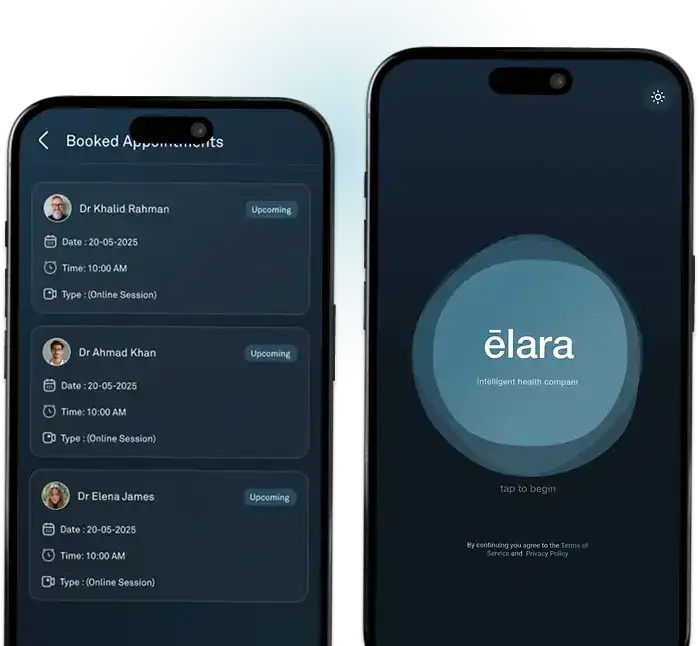
From Vision to Production
Phase 1
Discovery & Architectural Framing
Reframed the product from a basic chatbot to a coordinated state machine. Mapped exploratory, transactional, and post-appointment journeys to pinpoint AI handoffs. This critical mapping established the architectural backbone for the subsequent system engineering process.
Deliverables
Stakeholder Interviews, Process Modeling, Handoff Mapping, Compliance Documentation, Journey Analysis, Architectural Backbone
Phase 2
Subsystem Design
Decomposed backend infrastructure into eight loosely coupled subsystems covering memory, matching, records, scheduling, booking, payments, and operations. Each subsystem has a clear responsibility and defined contracts. Modular design enables independent replacement or scaling without impacting the rest of the system.
Deliverables
Subsystem Contracts, API Design, Data Ownership Models, Inter-Service Communication, Modular Architecture, Scalability Plan
Phase 3
The Authoritative Chat Lifecycle
Documented and implemented an eleven-step lifecycle for processing user messages securely. The pipeline manages session identification, pre-AI safety checks, vector retrieval, dual-output Claude prompting, metadata persistence, and final payload assembly. Each stage is independently observable and reviewable in production.
Deliverables
Claude Dual-Output Prompting, Emergency Pre-Processor, Vector Retrieval Pipeline, Semantic Signal Caching, Session Management, Metadata Persistence
Phase 4
End-to-End Validation
Verified system architecture against the full patient journey. Validated exploratory conversations, safety boundary cases, transitions to doctor recommendations, and secure booking flows. Every subsystem and integration handoff was exercised sequentially to ensure comprehensive performance before production launch.
Deliverables
Instrumented Journey Testing, Safety Bypass Verification, Payment Flow Validation, Subsystem Integration Testing, End-to-End Validation, Performance Checks
Phase 5
Hardening & Launch
Focused structural hardening on clinical safety, transactional integrity, and data scoping. Emergency barriers were load-tested to prevent latency bypasses, and payment handlers were made idempotent. Once core medical data paths were secured under sustained load, production rollout commenced.
Deliverables
Load Testing, Emergency Barrier Stress Testing, Idempotent Payment Handlers, Per-User Vector Scoping, Production Rollout, Data Security Checks
Phase 6
Observability & Iteration
Maintained observability across all backend subsystems after production rollout. Prompt engineering iterations refined response tone, clinical pacing, and edge-case handling. Continuous clinical safety reviews ensured behavioral integrity as patient traffic scaled and diversified.
Deliverables
Production Monitoring, Prompt Iteration Cycles, Clinical Safety Reviews, Performance Optimization, Observability Metrics, Continuous Improvement
Production-Grade. Clinically Accountable.
Modern, proven technologies selected for reliability, clinical safety, and maintainability within an Agentic AI healthcare product. Agentic AI architecture with a prompt-governed LLM layer, vector memory for persistent context, deterministic matching and booking engines, and asynchronous workers for all non-chat workloads.
AI & Intelligence Layer
Claude (Anthropic)
Primary AI Model · Dual-Output Prompting
Vector Database
Long-Term Patient Memory · Cosine Similarity Retrieval
Embedding Pipeline
Asynchronous Indexing · Off-Chat-Path Generation
Deterministic Scoring Engine
Hybrid Doctor Matching · Reproducible Rankings
Infrastructure & Safety
Pre-Processing Safety Classifier
Emergency Detection · Pre-AI Barrier
Ownership Middleware
Per-User Data Scoping · Cross-Patient Isolation
Asynchronous Worker Queue
Background Notifications · Retries
Centralized Logging
Cross-Subsystem Observability
CI/CD Pipeline
Independent Subsystem Deployment
Frontend Applications
React
Patient & Provider Web Application
Next.js
Server-Side Rendering · SEO
TypeScript
Type Safety
Responsive Design
Mobile-First · Cross-Device
Data Layer
MongoDB
Primary Document Store · Medical Records · Booking Data
Redis
Session Caching · Semantic Signal Cache (60–120s TTL)
Vector Store
Indexed Conversation Turns · Clinical Knowledge Fragments
Backend Services
Node.js
Runtime
Express.js
Routing
NestJS
Structured Services
TypeScript
Type Safety
Clinical Safety Engineered From First Principles
Emergency Detection Pipeline: Pre-processing classifier scans every message before AI invocation. Critical signals bypass the model entirely, returning a clinically-approved response and flagging for human escalation.
Prompt-Governed Behavioral Envelope: Zero diagnostic or prescription language, supportive but non-clinical register, explicit emergency override logic, all enforced through structured prompts, not model fine-tuning.
Per-User Data Boundaries: Vector queries scoped by user ID at the query layer before similarity is computed. Same boundary protects structured records and embedded memory fragments.


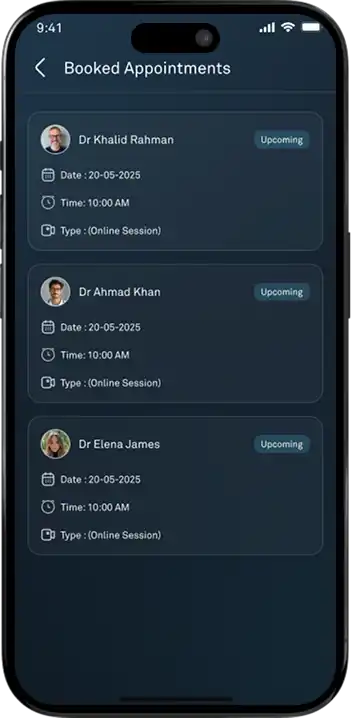
Webhook-Driven Payment Integrity: Booking state never advances on client-side claims. Only verified signed webhooks from the payment provider trigger state transitions.
Idempotent Handlers: Retries and out-of-order webhook delivery resolve cleanly, no duplicate charges, no double-confirmed appointments.
Full Observability: Every subsystem emits logs to a central system. Single patient transactions are traceable across all services, from first message to completed appointment.
Let's Engineer What's Next.
TekRevol delivers production-grade AI systems for founders and enterprises who refuse to choose between conversational intelligence and enterprise reliability.
Give Elara a Try, elara.ai Start a Project