



We are living in a digital age where technology guides every walk of our lives, and healthcare is no exception. Earlier, you had to drive to a clinic even for a cough checkup. Then the pandemic happened, and we were all forced to try virtual medical appointments. That’s when we realized that many health issues could be handled without leaving the house.
Now, telemedicine vs in-person care is the big debate for families and doctors alike. As a leading healthcare app development company, we have seen how virtual healthcare tools have turned into a normal. Many prefer video visits for a five-minute conversation. However, some people still worry about losing that human touch.
Let’s explore the benefits and limitations of telehealth vs in person care to see what patients actually prefer in 2026. We look at everything from the types of virtual care to why surgery still needs a hospital bed. You will learn about how a hybrid model actually leads to better healthcare outcomes.
What Is Telemedicine?
Telemedicine is a medical care method in which physicians treat patients who can’t commute to the clinic or hospital via phone or the internet.
While sound new, the debate of telemedicine vs in-person care exists decade ago when patients’ relative communicate their conditions to the doctors in-person. Telemedicine properly started with the advent of the phone and teleradiology. Doctors share the X-rays over phone lines to specialists via fax or early internet.
The practise was limited within hospital facilities for a long period of time. However, the outbreak of Corona virus made the use of telehealth in healthcare systems global. As per the American Medical Association, 71.4% of physicians reported using telehealth weekly in 2024, a massive jump from the 25.1% who did so in 2018.
This growth happened because AI agents in healthcare saved time on treating people, and patients liked the convenience.
Types of Telehealth
Modern medicine uses the following 4 types of telehealth to connect patients and doctors for efficient healthcare:
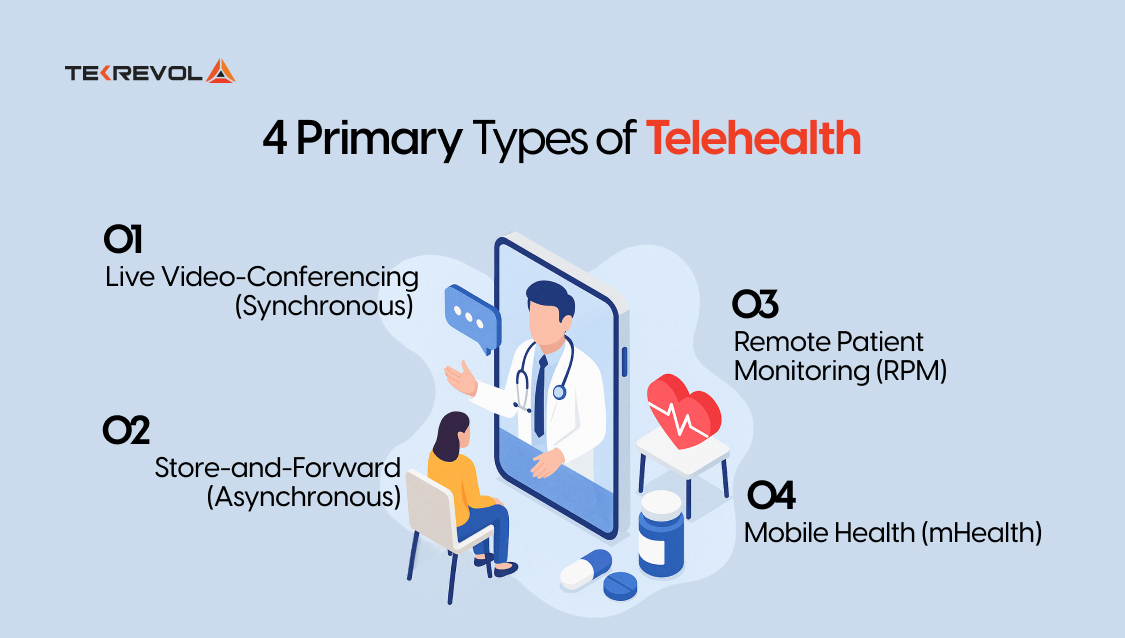
- Synchronous: It is a real-time two-way conversation in which patients can live chat with their doctor like a standard FaceTime or Zoom call.
- Asynchronous: This type operates of store and forward principle. You share a medical report or document, like a picture of a skin rash, with a specialist. They look at it later and send back their diagnosis.
- Telemonitoring: Also goes by the name of remote patient monitoring, this method is commonly used for treating chronic disease. A medical device, like a blood pressure cuff or a glucose monitor track your conditions and sends that data to your doctor.
- Mobile Health (mHealth): The category involves reliance on healthcare apps and e-learning medical platforms to monitor and treat patients.
Telemedicine vs Telehealth
While sounds the same, telemedicine and telehealth varies alot in practicality. Telemedicine specifically refers to clinical services. This includes virtual primary care and digital consultations where a doctor treats a specific illness.
On the other hand, telehealth is a broader term. It includes telemedicine plus everything else, like administrative meetings and health education. It covers the entire technology adoption movement from agentic AI to generative AI in healthcare.
Confused by Complex Medical Tech?
We simplify healthcare delivery by building custom digital clinics and telehealth platforms that are secure, scalable, and designed around modern patient needs.
Contact Us NowWhat Is In-Person Care?
In-person care is the traditional face-to-face medical interaction where a patient visits a physical facility for examination. It remains the baseline for diagnostic accuracy due to the ability to perform physical assessments.
Traditional Healthcare Model
This is the classic way of getting medical help. You go to a clinic for a physical examination and direct collaboration. Doctors apply all their expertise to check your health. They can feel for lumps or listen closely to your lungs. This model also makes laboratory testing and diagnostic imaging much faster since the equipment is right there.
Where In-Person Care Has Been Replaced
For many health issues, video calls have stepped in to replace traditional office visits, especially when a physical touch isn’t necessary. Telemedicine is taking over these areas via on-demand healthcare apps developed for doctors:
- Mental Health: This is the biggest one. Most people now see their therapist or psychiatrist online because talking from home feels more private and comfortable.
- Chronic Disease Management: If you have diabetes or heart issues, you can send your health data (like blood sugar or heart rate) to your doctor instead of driving in for a checkup.
- Routine Care: For things like refilling a prescription or a quick follow-up, most people now use a phone call to save time.
- Urgent Care Sorting: Before going to an ER for a small cough or rash, people use apps like Teladoc to see if they actually need to leave the house.
- Stroke Care: In some hospitals, a neurologist “sees” a patient via video to diagnose a stroke instantly. It saves lives because the specialist can start treatment much faster than if they had to drive to the hospital.
Where Direct Examination Remains Essential
Though most of the medical work is done online, some procedures still require the in-personal connection. Getting a physical surgery over the internet is impossible. Similarly, you need to go to a hospital or clinic for hands-on procedures and acute clinical intervention, like stitching a cut.
Physical presence is also required for complex diagnostics performed by big machines like MRIs. If you have an emergency, face-to-face care is the only safe option. Inshort, direct examination is still the gold standard for new or undiagnosed physical pain.
What Are The Key Differences Between Telehealth and In-Person Care?
Telehealth vs in person care differ greatly in physical accessibility, the depth of the physical exam, and the risk of infectious exposure.
The choice between telemedicine and in-person care usually comes down to what you actually need. Some things are a breeze online, while others are impossible without a doctor’s hands.
| Feature | Telehealth (Video/Phone) | In-Person Care (Clinic Visit) |
| Access | Instant; no travel; great for rural areas. | Requires travel and waiting room time. |
| Cost | Usually cheaper (no gas or parking fees). | Higher due to facility fees and travel. |
| Diagnostic Limits | Limited to what the camera can see. | Full physical exams and lab tests. |
| Exposure Risk | Zero; stay safe at home. | Risk of catching a cold or flu in the lobby. |
| Relationship | Efficient, but can feel less personal. | Stronger “human” connection and trust. |
| Visit Completion | High; fewer people miss appointments. | Lower traffic or work often causes “no-shows.” |
Trade-offs between Telemedicine vs In-person Care
When we look at telehealth cost vs in person visits, the digital route almost always wins on your wallet. A 2024 study published in ResearchGate showed that telemedicine appointments have 64% higher odds of being completed than in-person ones, because they remove barriers like childcare and transportation.
Clinics are also earning back the investment they made in the cost to develop a telemedicine app, as doctors can now treat more patients using these digital options. When looking at cost benefits, insurance variability is still a factor. Many companies changed their plans for reimbursement for telehealth vs in-person visits because people are more likely to show up for digital consultations.
This higher visit completion rate is another big win for digital care. However, digital literacy barriers remain a challenge. For the older generation who aren’t comfortable with apps, a video call can prove more stressful than helpful.
What Do Patients Prefer: Telehealth or In-Person Visits
Patients mostly go for telehealth for their routine BP and sugar check-ups. However, they want in-person care for serious issues. As per a study published in Springer, about 70% of people favor face-to-face visits for new diagnoses. However, over 60% prefer virtual visits for mental health and quick follow-ups. It really depends on the situation.
Patient Satisfaction
When asked, “Do patients like telehealth?” the answer is usually a loud “yes” for convenience. Patient satisfied with telehealth because they no longer have to commute. A study published by Natitional Cancer Institute highlights that on average, telemedicine saves patients between 2.9 and 3.4 hours of round-trip travel and clinic time per visit. This massive time saving is the main reason for the no-show reduction we see in clinics today.
Patient Usability
The usability experience has also improved. The best healthcare app development companies in the USA make these apps easy to use. Even people who aren’t “tech-savvy” can now navigate a video call without much trouble.
Who Prefers What?
Preferences often split by age and the type of health issue. Younger people (Gen Z and Millennials) always look for a digital option first. However, older patients often still believe that the quality of a face-to-face chat can’t be achieved in digital replacement, though many have embraced tech for routine check-ins.
When it comes to health issue categories, telehealth has completely taken over mental health care. Most patients feel more comfortable talking to a therapist from the privacy of their own home. Patients who need chronic care also appreciate the ability to send data from home. But for acute care (like a sudden high fever or a deep cut), almost everyone still prefers to walk into a clinic for a hands-on look.
Fragmented Care Hurts Patient Trust
TekRevol develops secure remote healthcare platforms that connect doctors and patients seamlessly—improving collaboration, continuity of care, and long-term trust.
Launch Your PortalTelemedicine Benefits vs In-Person Advantages
Telemedicine offers unmatched flexibility and cost-efficiency. Whereas in-person care offers superior diagnostic depth and immediate clinical collaboration.
Benefits of Telemedicine
The biggest draw for digital care is flexibility. You can talk to your doctor during a break at work or while the kids are napping.
- Reduced Travel: You don’t have to deal with traffic, parking, or gas money. This is a huge relief for people living in rural areas who used to drive hours for a checkup.
- Broader Reach: Doctors can help more people in a day, and patients can talk to specialists who live hundreds of miles away.
- Lower Indirect Costs: Beyond the medical bill, you save money on things like childcare or missing hours at work.
- Reduced Burnout: For doctors, being able to work from home a few days a week helps them stay focused, which leads to better care for you.
In-Person Care Advantages
Even with great tech, the clinic has “superpowers” that a screen just doesn’t have.
- Hands-on Diagnostics: A doctor can feel for a pulse, listen to your lungs clearly, or check a sore throat in person. These physical touches are vital for catching small problems early.
- Clinical Skill Development: Doctors and nurses learn best when they are working together in a room. Being on-site helps them keep their physical exam skills sharp.
- Immediate Collaboration: If your doctor needs a second opinion, they can often grab a colleague from down the hall right then and there.
- Higher Salary Stability: For medical practices, in-person visits often have steadier payment structures from insurance, which keeps the local clinic open and running.
What Patients Benefit Most from Telehealth?
Rural residents with limited mobility, immunocompromised patients, and busy professionals who cannot spare time for travel benefit most from telehealth. For these people, virtual access to care is not just a perk. They are a lifeline.
Rural and Underserved Communities
People living far from big cities often have to drive for hours just to see a specialist. Thanks to improved rural healthcare access, they can talk to the best cardiologist. This has closed a huge gap in telemedicine and access to care, ensuring that your zip code doesn’t determine the quality of your checkup.
Patients with Limited Mobility
For those using wheelchairs or living with conditions that make movement painful, a trip to the clinic is a major physical chore. Being able to see a doctor from home removes the stress of transportation and physical strain. Thanks to high-quality healthcare web app development, these patients can now easily upload vitals and chat with their care team through a simple browser window.
People with Weak Immune Systems
Those who need to avoid germs, a doctor’s waiting room is the last place they want to be. Telehealth enables them to get medical advice from the safety of their own home, so they don’t risk catching a cold or the flu.
Busy Parents and Workers
If you work a 9-to-5 or have kids running around, finding three hours for a doctor’s visit feels impossible. Many people in these underserved communities of “time-poor” workers used to just skip their appointments. Now, they can do a quick video call during a lunch break, which stops a small health issue from turning into a big emergency later.
Chronic and Mental Health Patients
Diabetes or high blood pressure patients just need a quick check-in. In fact, research by NIH shows that Type 2 diabetes patients who use telehealth apps saw their blood sugar levels (HbA1c) drop by over 2%, which is a huge win compared to standard care. Similarly, mental health patients can be more open to their consultant when they’re sitting on their own couch, which makes therapy work so much better.
How Does Telemedicine Improve Quality of Care?
Telemedicine makes care better because you can talk to your doctor more often. When checking in is easy, patients get better health outcomes because they actually stick to their treatment plans. Let’s look into some examples of telemedicine effectiveness:
- Better Follow-through: Patients are more likely to take their medicine correctly when they can quickly message their doctor with questions.
- Fast Access to Specialists: You can often get a digital consult in days rather than waiting months for an open slot at a big city hospital.
- Keeping the Same Doctor: You don’t have to switch providers if you move or change jobs. Staying with the same doctor ensures your medical history stays consistent.
How Does Telehealth Improve Client Care?
It has drastically reduced wait times for appointments. A major part of evidence-based telemedicine today involves wearable technology in healthcare. Smartwatches or digital blood pressure cuffs send data to your medical team. This level of care coordination creates better health outcomes and care continuity in several ways:
- Remote Monitoring Alerts: If your heart rate or blood sugar hits a dangerous level, your doctor gets an alert immediately. They can call you before an emergency happens.
- Reduced Wait Times: You aren’t sitting in a lobby for an hour. Most video visits start within minutes of your scheduled time.
- Care Coordination: Your primary doctor can easily share notes and video recordings with your specialists, so everyone is on the same page.
- Follow-up Efficiency: Checking in after a surgery or a new medication takes ten minutes on a screen instead of half a day of travel.
By cutting out the “hassle”, telemedicine vs in-person care helps people show up for their appointments. When patients show up, they get better care, and that is the most important innovation in the healthcare business for startups.
Challenges of Telehealth for Patients & Physicians
The main challenges include the inability to perform physical tests and concerns regarding data privacy and security. Understanding these hurdles helps us see why some people still prefer the traditional doctor’s office.
The Connection Gaps
One of the biggest issues is the digital divide. Not everyone has a fast internet connection or a brand-new smartphone. In many rural or lower-income areas, a video call might freeze or drop entirely. This leads to major patient frustration when you spend half your appointment just trying to get the audio to work.
Privacy and Cybersecurity Concerns
Many patients have cybersecurity concerns and worry about who might be “listening in” or if their records are safe from hackers. To keep things secure, most modern clinics rely on cloud computing in healthcare, which uses high-level encryption to protect your chats. Still, the fear of a data leak keeps some people from being fully open during a virtual visit.
Diagnostic Limitations
There is also the question of clinical accuracy. A doctor can’t physically press on your stomach to see where it hurts or look deep into your ears through a standard webcam. If the camera is blurry or the lighting is bad, the doctor might miss a small detail. This limitation means that for serious or mysterious symptoms, a digital call can only go so far.
Language Barriers and Fatigue
If a patient needs an interpreter, adding a third person to a video call can be clunky and confusing. Similarly, after a long day of staring at screens for work or school, the last thing some people want is another “Zoom meeting,” even if it’s for their health.
These challenges are why many clinics keep their doors open for anyone who finds the “digital way” more of a headache than a help.
Hybrid Care Models Are the Future of Healthcare
The future of healthcare relies on a hybrid model that uses an “omnichannel” approach. You use an app to start a conversation and move it to a clinic only when necessary. This digital transformation ensures that clinic chairs are saved for people who truly need a physical exam.
How Hybrid Healthcare Works in Real Life
The workflow of these integrated care delivery systems is simple. You might message your doctor about a weird cough. If it looks serious, the doctor books you for an in-person visit immediately. This results in revenue flexibility for clinics and better safety for patients.
The Role of Technology
Implementing these integrated healthcare delivery requires smart data. The applications of machine learning in healthcare help predict who might need an in-person checkup before they even feel sick. By blending digital tools with face-to-face trust, we are building a system that is faster, smarter, and much easier for the average person to navigate.
Wrap Up
The telemedicine vs in-person care debate isn’t about one being “better. The choice depends on what you need that day. Telehealth wins for convenience and routine stuff like therapy or meds. In-person care is still the king for serious diagnostics and physical work. Most of us prefer a hybrid model, where both options work together to keep us healthy.
Ultimately, the decision depends on your specific health condition. Whether you click a link or walk through a clinic door, the goal is the same: getting the right care without stress. As a leading digital transformation company, Tekrevol has seen how technology makes these choices more reliable every day. We focus on making these digital tools natural that fit your life, your schedule, and your health needs.
Static Care Models Hold You Back
Partner with TekRevol to build hybrid healthcare solutions that combine in-person and virtual care—driving stronger patient engagement, smarter workflows, and scalable growth.
Consult Our Experts Today


