The manner in which individuals access healthcare has evolved radically. Patients are demanding to have healthcare at any time, anywhere, just like any other digital service. This is achievable with telemedicine that offers rapid and convenient virtual consultations.
Things that were once considered a luxury or a workaround in the pandemic are now a new norm, and health professionals worldwide are adapting. The trend of investing in telemedicine apps by businesses is not merely a trend to get into now, but rather, businesses are future-proofing the care delivery process.
But execution matters enormously. A skilled healthcare app development company brings the clinical understanding, regulatory knowledge, and technical depth that the telemedicine app development space genuinely demands.
Understanding how these platforms function is the first step toward building one that truly delivers. This guide walks you through the key concepts in a straightforward manner.
What is a Telemedicine App?
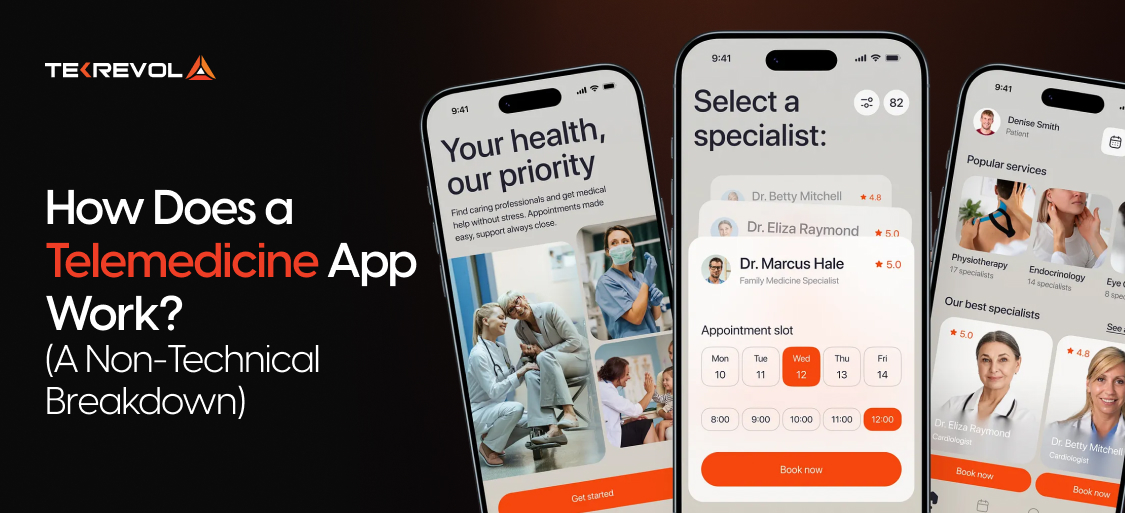
A telemedicine application is an online connection between patients and healthcare professionals, which does not involve face-to-face interaction and does not sacrifice the quality of care. It utilizes mobile technology, instant communication, and protected data transfer to provide virtual clinical care regardless of location.
On these platforms, patients can share their symptoms, obtain diagnoses, and have prescriptions filled, as well as track their treatment plans, all in one secure application. The telemedicine app development has moved well beyond a niche solution.
The telemedicine app development market in the world is expanding by 17.55% CAGR and is projected to hit 380.33 billion by 2030. Those businesses that can act urgently to develop a telemedicine application will benefit the most.
Telemedicine vs. Telehealth: What is the Difference?
Before getting into the details,s it is best to clear up one distinction that confuses. The bigger umbrella is telehealth, and it comprises education, telepharmacy, administration, and non-clinical remote support. By contrast, telemedicine is purely clinical, such as diagnosis, treatment, prescriptions, and monitoring of the patient.
This distinction is critical to consider when learning about medical application development or surveying custom telemedicine app development solutions. The distinction matters because it shapes your entire build, from the features you develop to the compliance standards you follow and the infrastructure your platform requires.
The needs of a hospital network constructing a post-discharge monitoring tool have a very different definition compared to those of a startup deploying an on-demand general practitioner platform. Understanding how to create a telemedicine platform that fits your specific application is the difference between a working product and a failure.
The Two Sides of Every Telemedicine App
Any telemedicine platform is designed with two different types of users who differ significantly in their requirements. The knowledge of both sides is important to know how the entire system functions.
The Patient Side is designed for simplicity. Patients, including both tech-savvy millennials and older adults with chronic illnesses, should experience something that will be considered intuitive and reliable. From registration and symptom description to payment and prescription pickup, the patient experience should be frictionless.
The Provider Side is built for clinical efficiency. Physicians, nurses, therapists, and various specialists require the tools that become part of their current workflow to access patient history, the capacity to write prescriptions, and secure communication channels that are secure. A doctor who has dozens of virtual appointments per day requires a dashboard that can display the appropriate information at the appropriate time without reducing their speed.
The third component of most telemedicine app development platforms is the administrative layer, which clinic managers, insurance coordinators, and support staff will use to manage the practice-wide scheduling, compliance, and billing.
Telemedicine Is Booming. Is Your Platform Ready?
Partner with TekRevol and get a dedicated team that manages every layer of your telehealth build—so you can stay focused on delivering exceptional patient care.
Start the Conversation Today!Types of Telemedicine Apps
Before you build, you need to know what you are building. Understanding the various telemedicine platform types is the first step and a direct factor in the cost of telemedicine app development.
Universal Marketplace Platforms
operate as open ecosystems, linking patients to an expansive network of independent physicians of various specialty types. They are perfect for general healthcare and an extensive geographic location. Consider them as the Amazon of healthcare.
Clinic-Owned Specialized Platforms
These apps are built and operated by specific hospitals or healthcare networks. They provide a more targeted, integrated care experience, including consistency in branding, unified patient records, and stronger adherence to the clinical standards and patient population of one organization.
Remote Patient Monitoring Apps
Focus on ongoing care, tracking vital signs, managing chronic conditions, and flagging concerning trends for clinical review. These platforms rely heavily on IoT device integration and are particularly powerful for post-hospitalization care.
Mental health platforms
Represent one of the fastest-growing categories in telehealth — and a space rich with mental health app development ideas. These platforms, developed with the specific needs of mental health in mind, specifically in terms of sensitivity and continuity, are created with therapy, psychiatry, and emotional wellness in mind.
Corporate Wellness Platforms
These Corporate Wellness Platforms are implemented to provide their workforce with easy access to primary care, mental health assistance, and preventive care to reduce absenteeism and enhance the health of workers at scale.
How Does a Telemedicine App Actually Work?
Using a telemedicine app feels effortless from the outside. However, under that simplicity, there is a well-developed process that reflects the quality of classical healthcare, but only faster and more conveniently. And this is how it all falls into place.
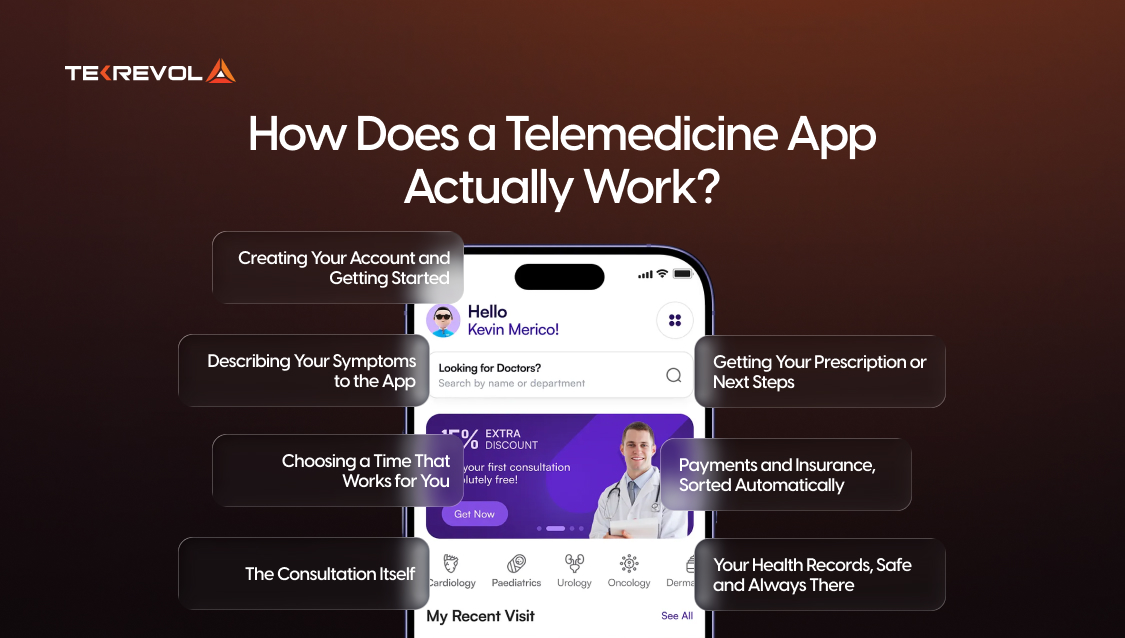
Creating Your Account and Getting Started
It starts with a mere registration. Patients fill out their basic information, insurance information, and a short medical history, ensuring every doctor they consult has the full picture before the visit starts.
At the provider side, physicians are verified more rigorously to ensure that only qualified physicians are registered on the site, and their medical licenses and qualifications are verified.
Describing Your Symptoms to the App
After registration, the patients report their symptoms via a guided questionnaire or a smart symptom checker. This move does not merely look like it; it introduces you to the appropriate specialist, makes the doctor you see ready in advance, and it also helps to know whether your worry can be safely addressed online or if you have to visit the facility. In case of something serious, it will provide you with emergency care immediately.
Choosing a Time That Works for You
Patients are then shown available appointment options. Some sites will connect you to a doctor within minutes. There are others who will enable you to make a reservation ahead of time at a convenient time for you. The app does all the legwork, matches you to the right specialty, makes sure your insurance is valid,d and considers geographic licensing regulations, ensuring your experience remains seamless.
The Consultation Itself
You get into a safe virtual waiting room at the appointed time, and soon after that, your doctor is with you. The video call is based on an encrypted and HIPAA-safe infrastructure, much safer than any ordinary consumer app. When talking with you, your doctor can view your medical history at the same time, type notes directly into your health record, and do the same level of clinical assessment that he would have done in person. Just without the commute.
Getting Your Prescription or Next Steps
If medication is needed, your doctor sends an electronic prescription to your preferred pharmacy within seconds of the consultation ending. Lab tests, imaging orders, and specialist referrals are treated similarly, digitally and immediately. Other apps also allow you to select a local laboratory and get your results in the app.
Payments and Insurance, Sorted Automatically
While your doctor finalizes their notes, the billing system is already working in the background. Insurance claims are submitted, and payments are processed automatically. For those paying out of pocket, the cost is shown clearly upfront, a welcome change from the confusing bills that traditional healthcare often produces.
Your Health Records, Safe and Always There
At the end of each consultation, the records are safely stored inside the platform. Numerous bespoke telemedicine applications will integrate with third-party health record systems, so your usual doctor does not get left behind, and your care is unified regardless of the number of virtual appointments you have attended or the locations.
Types of Telemedicine Consultations
Not every virtual healthcare interaction looks the same. There are three primary modalities that a robust telemedicine platform supports:
Video Consultations
It is the most interactive type, as it allows face-to-face bookings between patients and physicians on a real-time basis. This is especially useful in the initial examination, confirmation of the diagnosis, post-traumatic rehabilitation, and psychotherapy when visual activity and human contact really count.
Voice, Text, and Asynchronous Consultations
Not all appointments need a complete video session. Follow-up appointments, medication changes, test orders, and post-discharge follow-up can be done through voice calls, text-based messages, and pre-recorded videos, and allow patients with low connectivity or time to access care.
Electronic Prescription Issuance
After a consultation, physicians have the opportunity to subject a patient to the digital prescription on the platform itself, on the basis of the electronic medical history and the outcome of the examination. The order is sent to the pharmacy in real-time, eliminating another point of friction in the conventional healthcare process.
The most common use case is behavioral health, which constitutes 67 percent of telehealth visits in 2024 by commercially insured patients (American Hospital Association).
Advantages of Telemedicine Apps in Today’s Healthcare System
Nearly 79% of U.S. hospitals now offer telehealth services, highlighting the rapid adoption of virtual care. Here are the benefits for hospitals, doctors, and patients alike.
How Your Data and Privacy Are Protected
It is natural to wonder whether your personal health data is safe when using a telemedicine app. The good news is that trusted healthcare app development companies design these platforms with your privacy built in from the ground up.
HIPAA Compliance Is Non-Negotiable
The United States has a legal requirement that all telemedicine app development must adhere to HIPAA, the national standard of privacy of sensitive health information. This legislation regulates the process of collecting, managing, and sharing your data, and sites not comply with the provisions of the law are met with severe legal action. A reliable platform will ensure that an app has a visible HIPAA compliance statement when selecting one.
Your Data Is Encrypted
Everything that you post via a telemedicine application, your profile, messages, and the contents of your consultations are encrypted. This ensures that it is transformed to a secure and unreadable form that can only be accessed by those authorized, hence keeping your data safe at each level.
Your Consultations Stay Private
Video appointments will not be recorded and stored without your express permission. Your discussion with your provider is confidential, just like it would have been in a more traditional clinical setting.
Your Information Is Never Sold
Legitimate telemedicine platforms do not sell your health data to third parties or advertisers. Your information exists for one purpose only: to support your care.
Still Figuring Out What It Takes to Build a Telemedicine App?
Our telehealth app developers guide you through every step—from compliance and feature planning to development, launch, and long-term growth—ensuring a secure and scalable solution.
Book A FREE Call Now!Benefits of Telemedicine App For Doctors
Telemedicine isn’t just good for patients; it is shaping the future of healthcare for providers, too. Here’s how telemedicine app development is making a real difference on the clinical side.
| Benefits | How It Helps |
| Centralized Patient Data | Electronic Health Records (EHR) store and organize patient information, improving diagnosis accuracy and reducing medical errors. |
| Optimized Scheduling | Remote consultations help distribute workload more evenly, improving work-life balance and reducing burnout. |
| Administrative Automation | Automated documentation, reporting, and record management reduce time spent on routine tasks. |
| Improved Service Quality | Doctors can dedicate more focused time to patients and deliver faster treatment decisions. |
| Higher Productivity | Many providers report increased efficiency and the ability to serve patients across diverse locations. |
Benefits of Telemedicine App For Patients
For decades, healthcare was designed around institutions, not individuals. Today, digital healthcare solutions and their impact on the landscape are rewriting that story, and telemedicine is leading the way. Here’s how.
| Benefits | How it Helps |
| Access to Specialists | Patients can consult qualified doctors worldwide, especially valuable in areas with limited medical resources. |
| Convenient Home Treatment | Minor illnesses and chronic conditions can be managed from home, saving travel time and effort. |
| Remote Monitoring & Follow-ups | Post-hospitalization care and routine checkups become easier with virtual monitoring. |
| Easy Access to Medical Records | Digital records allow patients to view, share, and manage their health information anytime. |
| Time & Cost Savings | Eliminates travel, long waiting times, and unnecessary clinic visits. |
Build Your Telemedicine App with TekRevol
If you’re ready to build your own custom telemedicine app, the partner you choose will define the outcome. You need a team that doesn’t just understand technology but also understands healthcare.
TekRevol is a leading mobile app development company with deep, specialized expertise in building healthcare applications that perform in real-world settings. From Kinekt and Your Nurse to Libido Health, our portfolio reflects a consistent ability to deliver HIPAA-compliant, clinically sound, and technically robust digital health solutions, on time and at scale.
Each project demanded HIPAA-compliant architecture, EHR integration, encrypted video infrastructure, and intuitive patient-facing design, and we delivered on every front. Our telemedicine app developers handle medical data encryption and safety with the same clinical seriousness as the care your platform is built to deliver.
We handle everything from strategy and UI/UX design through to development, EHR integration, and post-launch support. You focus on patient care. We handle the build.
The Demand for Telemedicine Is Growing. Is Your Platform Ready?
We help you build a telehealth solution that’s clinically sound, technically robust, and engineered to scale—so you can meet rising patient demand with confidence.
Book A FREE Consultation Now!

![Types of Telehealth: Platforms, Services & Technologies Explained [2026]](https://d3r5yd0374231.cloudfront.net/images-tek/uploads/2026/03/Types-of-Telehealth.jpg)

![How Much Grocery App Development Costs [Complete Breakdown for 2026]](https://d3r5yd0374231.cloudfront.net/images-tek/uploads/2026/03/Tek-Feature-11.jpg)