Finding the best way to earn from a mobile app is a big challenge for any business. Relying on just one method, like ads or sales, won’t guarantee a stable income in a competitive market like Houston. Sensing the danger, many owners now prefer a hybrid app monetization strategy to keep their projects alive. Mixing the best of subscriptions and in-app buys, hybrid monetization models help you earn from every user and build a stronger foundation for your mobile app monetization goals.
Recent data shows that apps using multiple revenue streams see a 30% jump in their lifetime value (LTV). This is because you give users a choice. Some people will pay for premium tools while others prefer to watch a short video. Many local brands are working with app developers in Houston to build a flexible mobile app monetization plan that taps into a market projected to hit $600 billion this year.
This blog will take you on a journey through the best ways to grow your digital income. We will break down specific hybrid app monetization strategies that work in 2026. You will see exactly how this mix changes your financial outcome by boosting LTV and user retention.
What Is a Hybrid App?
A hybrid app blend web page and a normal phone app. Its mobile app architecture uses web tools like HTML and CSS. Built with cross-platform frameworks, it acts like a website wrapped inside a phone app shell.
Since these apps reach more people at once, they monetize differently than native ones. You do not have to build two separate versions to start earning. Instead, you can show the same offers to everyone. This leads to a better outcome because you spend less on building and more on growing your LTV.
The debate of hybrid vs native app often comes down to how much you want to spend and how fast you want to launch. Choosing hybrid mobile development is a smart move. It gives you the flexibility to change your features across all devices at the same time. This saves you a lot of headaches as your brand grows.
What Is Hybrid App Monetization?
Hybrid app monetization is a business strategy of using several ways to earn revenue within a single mobile application. You combine ads and one-time buys and recurring monthly payments to capture value from every segment of your audience.
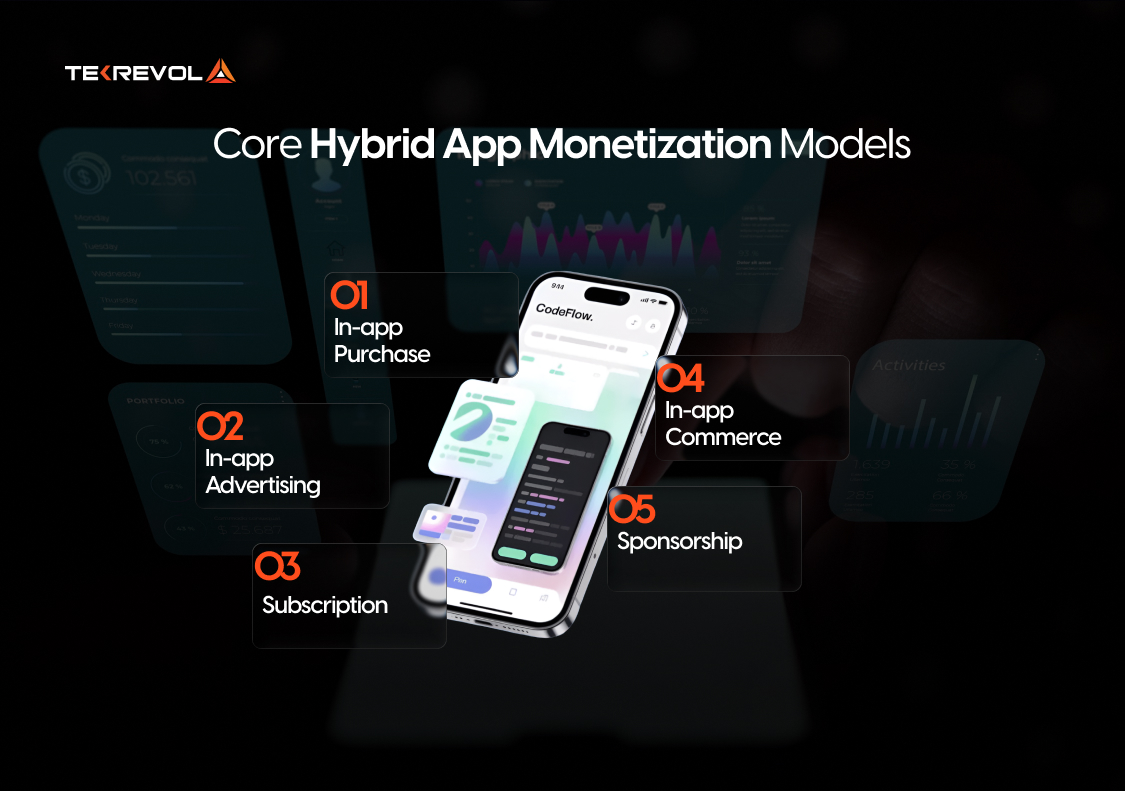
A hybrid monetization strategy is successful because it focuses on monetizing free users who might never pay for a premium plan. To build a strong system, most creators use these four core revenue streams:
- In-app advertising (IAA): You show ads to your users and get paid by networks for every view or click. To learn more about how this works, check out this guide on in-app advertising.
- In-app purchases (IAP): Users can purchase digital items such as extra lives, special filters, or virtual coins directly within the app.
- Subscriptions: People pay a recurring monthly or yearly fee to access exclusive content or remove all ads.
- In-app commerce/affiliates: You earn a commission by helping users buy physical products or services from partner brands.
By using diversified revenue models, you create a safety net for your business. If one source of income drops, the others can help keep your cash flow stable.
Scale Your App Revenue with Tekrevol
We build smart monetization systems to grow your profits.
Book Your Free Call NowWhy Hybrid App Monetization Is Replacing Single Revenue Models
Relying on one way to make money is now a big risk for app owners. Many people feel subscription fatigue, and they do not want to pay for another monthly fee. Consequently, you need alternatives to the subscription model to keep your income steady.
The data shows a very clear reality about how people use apps:
- The 5% Rule: As per global in-app purchase revenue statistics from Invesp, 95% users will never spend actual money inside your app.
- High Costs: The price to get a new user to download your app is rising fast.
- User Choice: People want to choose between watching an ad and paying for a feature.
If you only use one of the traditional revenue models, you ignore almost all your potential profit. You need a mobile app monetization plan that earns from the 95% who do not spend and the 5% who do.
Mixing your app revenue models helps with monetization scalability as your user base grows. By using revenue diversification, you can show ads to free users and offer perks to big spenders. This balance helps your lifetime value (LTV) go up without making users quit.
Core Hybrid App Monetization Models
A hybrid model is not just a random mix of features. It is a structured plan to ensure every user helps you earn. Whether someone is a big spender or a casual browser, your app should have a way to capture value. Using a mix of these four is the best way to start your journey. Each one targets a different type of user behavior and need.
In-App Advertising (IAA)
Ad monetization is the most common way to earn from non-paying users. In 2026, the key is to use ads that do not interrupt the fun. Many owners ask how free apps make money when they do not charge for a download. The answer often starts with these three types of ads:
- Rewarded videos: These are the most popular choice for engagement, with 91% completion rate cited by Playwire. Users watch a short video to get a gift, like an extra life or a hint. Because the user chooses to watch, they do not feel annoyed.
- Interstitial ads: They take up the screen and appear between different tasks or levels. For example, you might see one after you finish a game level or save a file. Business of App highlights that in the US, these ads can earn you over $14 per thousand views on both Android and iOS.
- Native placements are a type of advertisement that looks like a part of your app. They blend in with the content of your app. So they do not look like the commercials.
In-App Purchases (IAP)
In-app purchases are the second pillar of a strong strategy. Unlike ads that target everyone, microtransactions target your most loyal fans. These people, often called whale users, are willing to pay money to make their experience even better. Sensor Tower shows that IAP revenue reached $150 billion in 2024.
- Consumables are things that people use up, like gold or health potions. Users can buy these many times whenever they need a boost.
- Cosmetics allow users to change how their app looks. This includes things like new character designs for a game or custom themes for a chat app.
- Power-ups help users solve problems faster. A user might buy a “speed boost” to finish a task in half the time.
Selling virtual goods is a great way to keep your top users invested. It allows them to personalize their experience and progress at their own speed.
Subscriptions
Subscriptions provide recurring revenue every month, which is vital for long-term growth. You can offer premium access to users who want a better experience. About 82% of non-gaming apps use this model in some form.
- Ad-free tiers: Many users will pay a small monthly fee just to remove all commercials. This is a very simple way to offer premium access.
- Offer a free trial so people can see the benefits before they commit. This helps you build a loyal base of users who support your app for a long time.
- Use tiered subscriptions like “Basic,” “Pro,” and “Family” to fit different budgets. This allows you to serve both casual fans and power users at the same time.
This model is perfect for apps that provide value every day, like news or fitness tools.
Alternative & Emerging Streams
You can also look into new ways to earn money, like in-app commerce and brand deals. Over 60% of top-grossing apps now use a mix of these extra streams. The methods help you stay profitable without relying solely on your users’ wallets.
- In-app commerce: You can sell physical products directly through your app. A fitness app could sell protein powder or gym gear to its members.
- Affiliate offers: You can recommend products from other brands and earn a commission. When a user clicks your link and buys something, you get a cut of the sale.
- Sponsored content: You can partner with brands to show their products helpfully. These brand partnerships feel more like a recommendation than an ad.
Using these extra streams helps you build a truly diversified revenue model. It keeps your income high even if one area slows down.
2026 Top Hybrid App Monetization Strategies
To build a high-earning app, you need a plan that covers every type of user. A good monetization mix ensures that no one uses your app for free without giving back some value. By using smart user segmentation, you can offer the right deal to the right person at the right time. These strategies help you create engagement loops where users feel rewarded for staying active.
Rewarded Video Ads + IAP
This is a classic way to monetize a game or a high-energy utility app. You give users a choice: watch a 30-second video or buy a pack of virtual coins.
Data shows that users who watch rewarded ads are actually 4x more likely to make an in-app purchase later. This happens because the ad acts like a “test drive” for premium features. Once a user sees how much fun a power-up is, they are more willing to spend real money to get it instantly.
Subscriptions + Ads
Many apps now use an “ad-supported” tier alongside a paid premium plan. This is a great way to handle price-sensitive users who do not want to pay monthly fees. You show standard ads to your free users to cover your costs. Then, you offer a “Pro” version that removes all ads and adds extra tools. In 2026, about 82% of non-gaming apps use this model to keep their income steady. It allows you to earn from everyone while giving people a clear reason to upgrade.
Rewarded Ads + Subscriptions
This strategy works perfectly in markets where users have less money to spend on digital items. Instead of a hard paywall, you let users “earn” their way into premium areas. A user might watch three rewarded videos to unlock a “Premium Day” for free. This builds a habit of using your best features every day.
Over time, these users often get tired of watching ads and decide to subscribe for a smoother experience. This is one of the best app user retention strategies to grow your lifetime value (LTV) without losing your audience.
In-App Commerce as a Meta-Layer
A very fresh strategy for 2026 is adding a shopping layer inside your app. You do not just sell digital coins; you sell real products or services through brand partnerships. For example, a workout app could sell gym clothes or health supplements through an affiliate link. This uses in-app commerce to add a new stream of cash that does not bother the user. Because you are recommending helpful products, it feels more like a service than a sales pitch.
When building these complex systems, a professional cross-platform app development company makes it easy to manage all these payment systems from one place. This saves you time and ensures your app runs perfectly on both Android and iOS.
Diversify Your Income Streams
TekRevol designs smart hybrid app monetization strategies for maximum growth.
Get Started TodayHybrid App Monetization Examples
Many famous apps use a hybrid monetization strategy to keep users happy and their business profitable. By studying a monetization case study, you can learn how to balance ads and purchases in your own project.
Mobile Games [Ads and Purchases]
Most modern mobile game development company combine ads and purchases to earn from every player. A great example is Candy Crush Saga. It uses rewarded ads to give players extra moves. At the same time, it offers in-app purchases for those who want to skip levels instantly.
Similarly, games like Subway Surfers mix ads for free lives with a store for new characters. They also have special offers that change every single day to keep things fresh. This has helped them stay profitable for many years.
Social Media Apps [Subscription and Ads]
Streaming and social platforms also use hybrid models to manage huge user bases. It lets the app reach millions of people without charging everyone upfront.
Spotify is among the top hybrid app examples that use a dual model. It offers a free version supported by audio ads, but users can pay for a monthly subscription to go ad-free.
Hulu uses a similar logic by offering a cheaper subscription that still includes some commercials. Users can then choose to pay a higher premium price to remove ads entirely.
Productivity Apps [Subscription and Premium Add-ons]
Professional apps often use a base subscription with extra “pay-as-you-go” features for power users. This creates a flexible system where users choose how they want to support the app.
Duolingo offers a premium subscription to remove ads and give users unlimited health. However, even free users can spend virtual gems to buy special outfits or fix a broken streak.
Evernote provides a free basic plan but charges for more storage. It also offers one-time “add-ons” like professional templates for users who do not want a full monthly bill.
These real-world examples prove that you do not have to stick to just one revenue source. By mixing ads and subscriptions, these brands have built multi-billion dollar businesses.
How to Monetize Your Hybrid App in 2026 [Best Practices]
Building a business that people will really like starts with thinking about how people use your app. If the ads in your app are annoying or get in the way, people will close your app. Find something else to do.
Focus on retention optimization to make sure people want to keep using your app so they come back to your app again and again over time. This way, you can build a relationship with the people who use your app.
Smart app marketing strategies help you find users who truly value your content. Once you have a loyal audience, you can apply these expert methods to turn engagement into revenue.
Balancing IAA and IAP
A common fear for apps is that showing ads will stop people from buying items. This is called revenue cannibalization. However, data shows that a smart monetization mix actually helps both streams grow.
Separate your ad-heavy areas from your premium shop. For example, you can offer rewarded ads to help users reach a goal faster. This teaches them the value of your digital goods. Once they see the benefit, they are more likely to spend real money in your shop later.
User Segmentation & AI Personalization
Do not show the same things to every single person who opens your app. Divide users into groups by their age or interests. Whales are the top users who spend a lot of money. Show them fewer ads and more high-value deals.
On the other hand, for your non-spenders, include more rewarded videos and affiliate offers. This way, you earn from every single person without annoying your best customers. Personalizing the experience using AI ensures that everyone feels the app is made just for them.
Non-Intrusive Formats and Game Loops
Your choice of ad type matters for retention optimization. If an ad covers the screen while someone is typing, they will get angry. Instead, use formats that feel like a natural part of your app.
Only show an ad when it makes sense in the user’s journey. If a user just finished a hard task, they might be happy to watch a video for a small reward. This balance prevents ad fatigue and keeps people using your app for a long time.
Avoiding Pay-to-Win
While earning is the goal, you must avoid “pay-to-win” systems that make your app feel unfair. If users feel they can only succeed by spending money, they will lose interest very quickly.
Instead, focus on selling items that add fun or save time without breaking the core balance of the app. This builds trust and keeps people coming back every day. A fair app is a profitable app in the long run.
Use Smart Architecture
Think about your choice of architecture when setting up your shop. A solid mobile app architecture handles different payment tiers without slowing down or crashing. Instead of giving users fifty options, give them two or three clear paths. You could offer a free version with ads, a small daily pass, or a full monthly subscription. This gives people a sense of control and prevents ad fatigue.
Data-Driven Monetization Decisions
Data is your best friend when you want to earn profit on the hybrid app development cost. Use monetization analytics to track every cent and view. You should use A/B testing to try different ad placements and price points. By tracking your LTV closely, you can see if your changes are actually making more money.
When you combine these thoughtful touches, you create an app that people love to use. This balanced approach is how you turn a simple download into a long-term, loyal customer. By respecting your audience, you ensure your revenue stays high for years to come.
How To Choose the Right Hybrid App Monetization Strategy
The best monetization framework for you depends on what your app does and who uses it. For instance, a game needs a very different plan than a bank app. A strategic fit is much more important than just copying a popular app. Use this simple table to help you decide which path to take.
| App Type | Main Revenue | Second Revenue | Third Revenue |
| Gaming | Purchases | Rewarded Ads | Subscriptions |
| News | Subscriptions | Native Ads | Sponsored |
| Fitness | Subscriptions | Store | Unlocks |
Mobile App Monetization Trends 2026
The future of monetization is moving away from generic offers toward highly personal experiences. The most successful apps do not just ask for money. They use AI to understand exactly what a user needs at that specific moment. This shift is part of the broader mobile app development trends in Houston and other major tech hubs.
By following these five major paths, you can build an app that earns more while keeping users happy.
1. The Growth of Hybrid-Casual Games
One of the biggest shifts is the rise of hybrid-casual games. These apps take the simple gameplay of casual titles and add deep revenue layers. Instead of only showing ads, these games now include long-term goals and item shops. This mix allows developers to earn from millions of free players while still getting big payments from dedicated fans.
2. AI-Powered Dynamic Pricing
Artificial intelligence is now the brain behind every successful paywall. AI personalization allows an app to change its prices based on how much a person uses the software. For example, if the system sees that a user is active but has not paid, it might offer a one-time 50% discount. This “dynamic pricing” helps turn casual browsers into paying customers by giving them the right deal at the right time.
3. Integrated In-App Commerce
Apps are no longer just tools; they are becoming shopping malls. Many social and fitness apps now include a commerce layer where you can buy real products without leaving the screen. If a user is tracking a run, showing them a deal on new sneakers is a great way to add value and earn a commission.
4. Subscription Fatigue Solutions
To fight the “subscription fatigue,” many apps are moving toward micro-subscriptions and daily passes. Instead of a full year, a user might pay for just one week of premium access. This flexibility keeps people from canceling and helps maintain a steady flow of cash from users who do not want a long commitment.
5. Ethical First-Party Data Use
Privacy is a top priority for users today. Successful apps are moving away from tracking people across the web and focusing on their own data instead. By looking at how people use their own app, developers can offer better suggestions and ads. This builds trust because users know their data is safe and stays in one place.
Conclusion
Choosing the right hybrid app monetization plan is the secret to long-term success. We have seen how mixing ads with subscriptions and purchases helps you earn from every user.
However, you must stay aware of market sensitivity to keep your prices fair. Watch your audience’s maturity to see when they are ready for premium offers. This balanced approach keeps users happy while your revenue grows.
To make this happen, you need a partner who understands the latest tech. As a top mobile app development company, Tekrevol helps you build these complex systems. We ensure your app is fast and your payment tools work perfectly.
Ready to Grow Your App Business
Monetize your app with TekRevol to turn your vision into a profitable reality.
Talk To Us Today