



“Not your keys, not your crypto.” says every veteran crypto person ever!
If you’ve ever lost sleep and get awake in the middle of the night worrying about your digital holdings being lost in a compromised exchange, you’re not alone!
By 2026, crypto protection isn’t something nice and “good looking graphy tech”- it has now become the financial freedom every individual desires.
As DeFi, Web3, and AI-powered trading have evolved, owning a crypto wallet app of your own is no longer about keeping Bitcoin on your device. It’s about security, control, and financial independence!
Saying that, if you’re ready to say goodbye to centralized risks and create a safe, feature-rich crypto wallet, you’re in the right place.
This guide is going to take you through it all – from selecting the right blockchain to incorporating iron-solid security. That, too, while keeping things entertaining and easy to comprehend.
So, without any further ado, let’s go!
Understanding Crypto Wallets
If you’ve ever held cryptocurrency, you’ve utilized a crypto wallet.
A crypto wallet is not like a real leather wallet in which you just stuff cash – it’s a virtual device that allows you to store, send, and receive cryptocurrencies safely.
But here’s the twist: crypto wallets don’t store your crypto.
Whereas, they retain your public and private keys, the identities that allow you to access and manage your online assets on the blockchain.
You lose your keys, and-poof!-your cryptos are history. (Indeed, there exist terrifying tales about individuals losing fortunes because they do not remember the password to their wallets.)
Why Do You Need a Crypto Wallet?
- Security – In contrast to centralized exchanges that are vulnerable to hacks, wallets provide you with control of your money.
- Financial Freedom – No banks, no middlemen. You have control of your crypto without limits.
- Fast & Global Transactions – Send Bitcoin to a person in Japan in minutes without any bank approvals.
- Integration with DeFi & NFTs – Crypto wallets are crucial to use when interacting with decentralized finance (DeFi) applications and holding NFTs.
Revenue in the cryptocurrency market is projected to reach US$85.3bn in 2026. The average revenue per user in the cryptocurrency market amounts to US$109.1 in 2026.
Types of Crypto Wallets
All crypto wallets are not the same. Some are hot and ready to go, while others like to remain cold and offline.
The right type depends on how you intend to use your crypto-whether you’re a casual trader, a long-term investor, or a hardcore DeFi user.
-
Hot Wallets (Software-Based)
Hot wallets are internet-connected, so they’re easy but riskier to hack. Consider them similar to a debit card – really convenient but dangerous if somebody gets hold of them.
Examples:
- Mobile Wallets – A mobile app like Trust Wallet or MetaMask allows you to hold and exchange crypto on your smartphone.
- Web Wallets – Exchange-based wallets like Binance Wallet store your funds but aren’t fully under your control.
- Desktop Wallets – Software wallets like Exodus offer better security than web wallets.
Cold Wallets (Hardware & Paper Wallets)
Cold wallets are offline storage solutions, making them ultra-secure for long-term holdings.
Let’s understand with an example:
- Hardware Wallets – Devices such as the Ledger Nano X and Trezor keep your keys offline.
- Paper Wallets – Traditional but effective keys are physically printed on paper and kept in a safe place.
Non-Custodial vs Custodial Wallets
- Custodial Wallets – A third party (like an exchange like Coinbase) controls your assets.
- Non-Custodial Wallets – You own the private keys (e.g., a wallet like MetaMask).
If you’re looking for the ultimate security, non-custodial wallets are the best. Let’s look at some key features of a secure and efficient crypto wallet or crypto wallet app.
Before writing any code, understand the regulatory environment your wallet will operate in. Depending on your target market, you may need KYC (Know Your Customer) and AML (Anti-Money Laundering) processes, especially for custodial wallets. Non-custodial wallets face lighter obligations since users control their own keys, but data privacy laws (like GDPR) and regional crypto regulations still apply. Skipping this step is one of the most common reasons wallet launches get delayed or blocked from app stores.
Key Features of a Secure and Efficient Crypto Wallet App
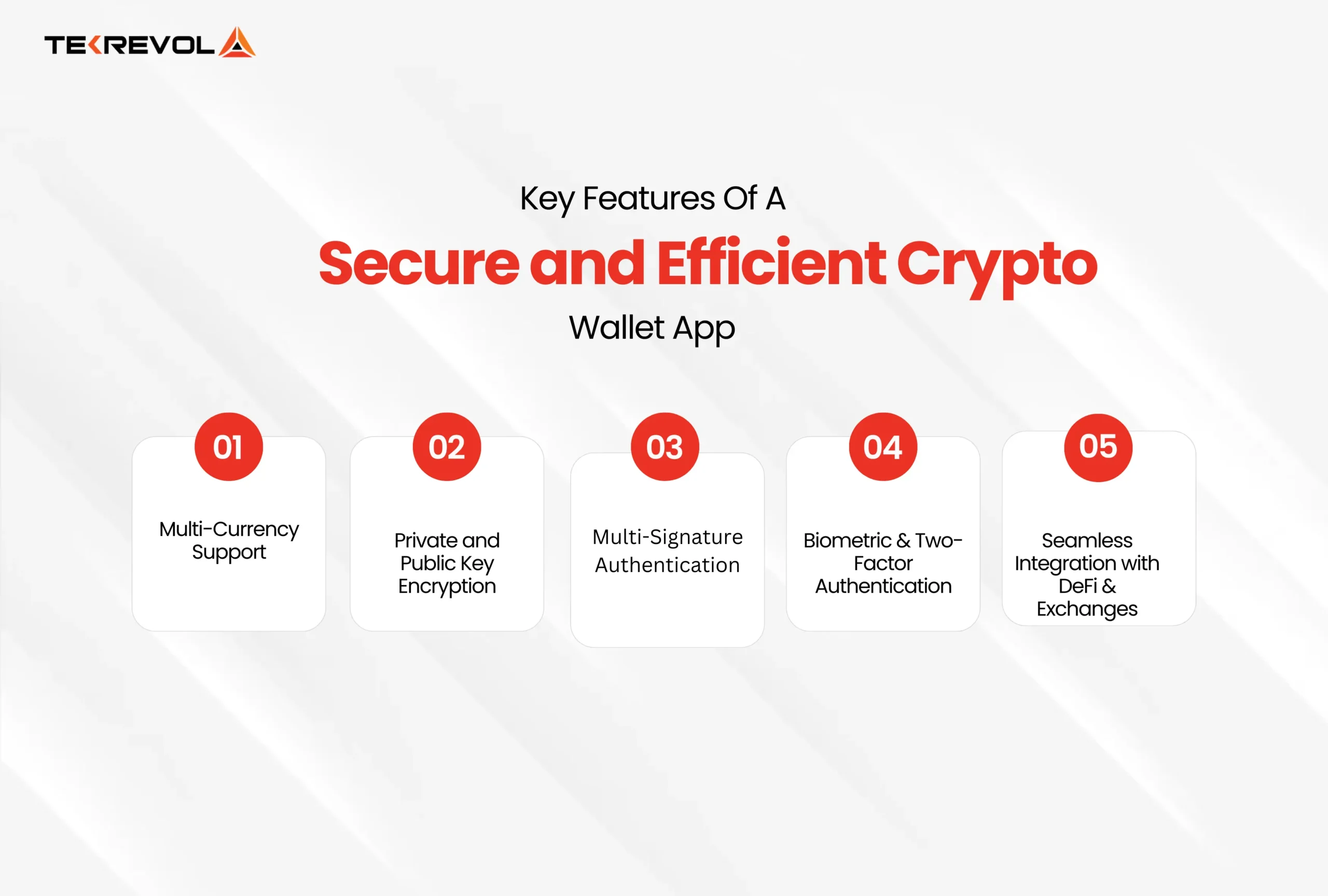
Good crypto wallets aren’t just where you keep your digital coins-it are what give you a stronghold for your valuable assets and keep the transactions smooth and hassle-free.
If you are going to build a crypto wallet, you must pack the app with world-class security, user-friendly functionality, and ease of use.
Those three features are absolute requirements of a great crypto wallet app.
-
Multi-Currency Support
A Bitcoin-only wallet? That’s 2010. Crypto users today handle multiple assets such as Ethereum, Solana, and stablecoins. A wallet must handle hundreds of cryptocurrencies so users don’t have to have a separate app for each token.
-
Private and Public Key Encryption
A well-encrypted wallet is like having a bank without vaults. Private keys must be encrypted and held in safe keeping to avoid unapproved access. End-to-end encryption protects transactions so they are inaccessible to prying eyes.
Most non-custodial wallets generate keys using the BIP-32/39/44 Hierarchical Deterministic (HD) standard, which allows a single seed phrase to securely generate and recover an entire tree of wallet addresses , the same standard used by MetaMask and Trust Wallet.
-
Multi-Signature Authentication
Multi-signature (multi-sig) wallets need multiple approvals before a transaction can proceed. This is particularly helpful for companies and high-value traders who need additional security against hacks or unintended transfers.
-
Biometric & Two-Factor Authentication (2FA)
SMS-based 2FA is no longer considered secure enough on its own; it’s vulnerable to SIM-swapping attacks. 2026 security standards favor hardware-backed biometrics (Face ID, Touch ID) combined with FIDO2 passkeys for authorizing transactions, giving users protection that can’t be intercepted remotely.
-
Seamless Integration with DeFi & Exchanges
Crypto wallets are not only for storage anymore. They’re gateways to DeFi. Having staking, lending, and swapping directly in the wallet makes it more useful for users.
With these security and usability features, your crypto wallet app won’t only be safe- it’ll be unstoppable! Now, let’s dive into the step-by-step process of developing a crypto wallet app.
- Think Your Crypto Wallet Idea is The Next Big Thing?
- Great! But without rock-solid security and seamless UX, it’s just an idea!
Step-by-Step Guide on How to Create a Crypto Wallet App
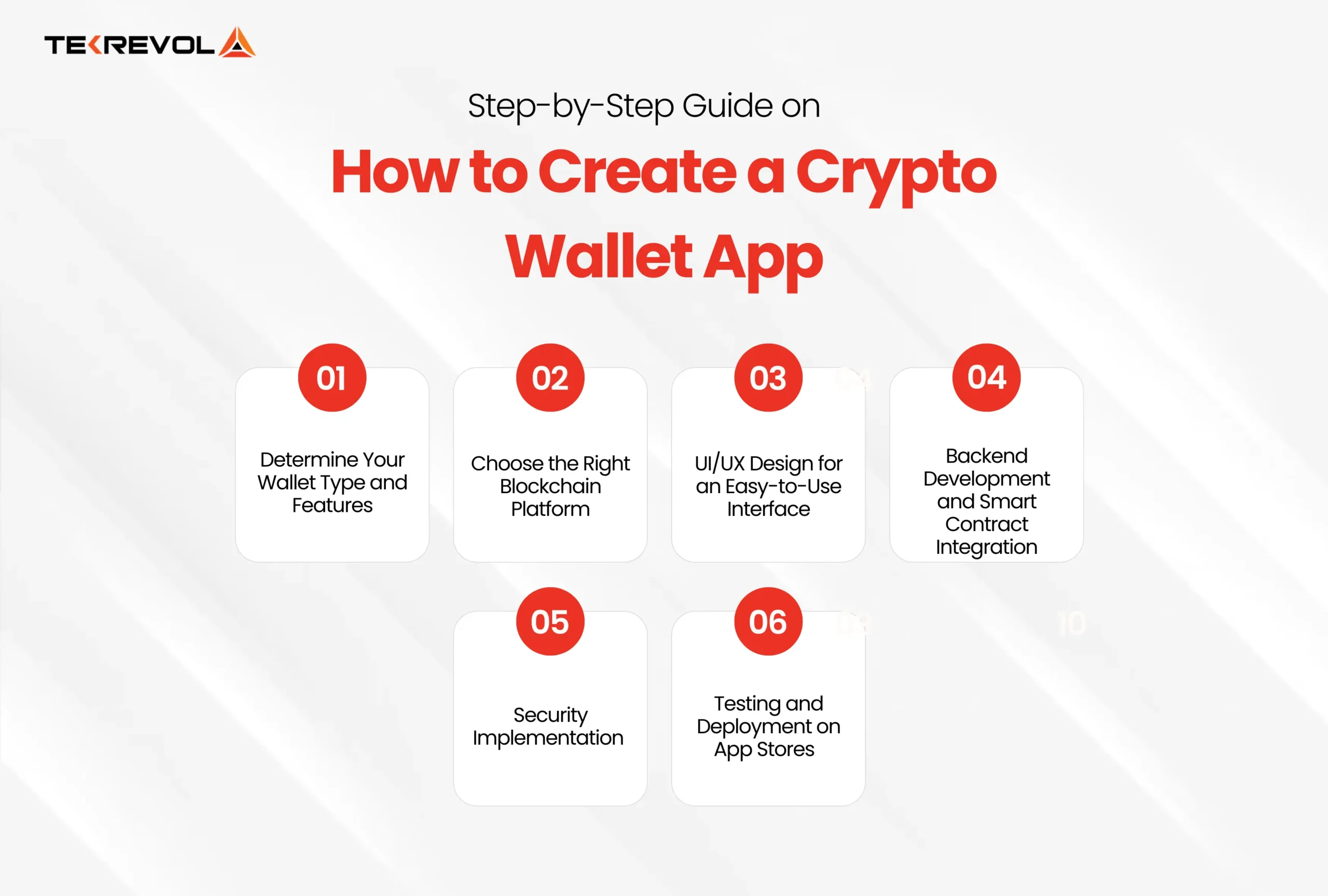
Creating a crypto wallet app is not a matter of throwing some code together and being done with it. It entails well-thought-out planning, tight security protocols, and smooth blockchain integration. Here’s how to do it step by step!
-
Determine Your Wallet Type and Features
Before writing a single line of code, decide what kind of wallet you’re building. Ask yourself:
- Hot or Cold Wallet? (Online vs. Offline)
- Custodial or Non-Custodial? (Third-party managed vs. user-controlled)
- Multi-Currency Support? (Bitcoin only or all major tokens?)
- DeFi Integration? (Staking, yield farming, and lending support)
- Have you analyzed competitors like MetaMask, Trust Wallet, and Coinbase Wallet to see what’s already working — and where users complain?
-
Choose the Right Blockchain Platform
Your wallet needs to interface with a blockchain, so getting this right is really important. The following are the most well-known options:
| Blockchain | Why Use It? |
| Ethereum | Best for smart contract integration and DeFi apps |
| Binance Smart Chain | Faster and cheaper transactions than Ethereum |
| Solana | High-speed transactions with low fees |
| Bitcoin | Secure and widely adopted, but limited functionality |
-
UI/UX Design for an Easy-to-Use Interface
No one enjoys a complicated crypto app. A sleek, easy-to-use UI is the most important factor in providing secure navigation and simplicity.
- Simple design not to overwhelm users
- QR Code Scan-to-Send/Receive: Letting users scan a wallet address instead of manually typing long alphanumeric strings dramatically reduces transaction errors and speeds up the send/receive flow.
- Dark & Light mode to accommodate user choice
-
Backend Development and Smart Contract Integration
This is where the real magic happens. Your backend should handle the following:
- Transaction validation
- Blockchain node integration
- Encryption & key management
-
Security Implementation
A crypto wallet is only as strong as its security. Use these advanced security features:
- Multi-Party Computation (MPC) for private key protection
- SSL Encryption to safeguard user data
- Anti-Phishing Mechanisms to prevent scams
-
Testing and Deployment on App Stores
Before launching, rigorous testing is required. Simulate cyberattacks, test transactions, and fix bugs before deploying on Google Play & Apple App Store.
By following these steps, you’ll build a secure, feature-packed crypto wallet app that users trust. Up next: Best Tech Stack for Crypto Wallet App Development
- Building a Crypto Wallet is Hard - But Not With Us!
- Let Us handle the tech headaches, security nightmares, and blockchain complexity!
How Will You Monetize Your Crypto Wallet?
A wallet doesn’t have to be a cost center; done right, it becomes a revenue engine. Before you finalize your feature set, it’s worth deciding how the app will actually make money, since your monetization model directly shapes your backend architecture and roadmap.
Common ways crypto wallets generate revenue:
- Transaction Fees: A small percentage charged on sends, swaps, or conversions.
- Staking Rewards: Users earn yield by staking assets directly in-app, with the wallet taking a cut.
- Token Swap Spreads: A margin built into the exchange rate when users swap one asset for another.
- Premium Features: Advanced analytics, priority customer support, or higher transaction limits behind a paid tier.
Locking in your monetization strategy early — rather than bolting it on after launch, means your engineering team builds the right infrastructure from day one instead of retrofitting it later.
Crypto Wallet App Development Trends in the Future
Crypto wallets are going beyond the simple storage and transfer of digital assets. With blockchain technology advancing quickly, wallets of the future will be more intelligent, more secure, and highly integrated into the decentralized environment. Let’s discuss some of the largest trends affecting the future of crypto wallets.
-
AI-Based Crypto Wallets
Artificial intelligence is transforming the security and usability of crypto wallets.
Fraud detection based on AI can monitor user behavior and identify suspicious transactions.
Intelligent investment advice can assist users in making more informed trading choices.
Voice-based transactions (yes, sending Bitcoin using voice commands with your phone!)
Example: AI-driven risk analysis tools are already being incorporated into wallets such as ZenGo to identify phishing activities.
-
DeFi and Web3 Wallet Integration
With DeFi (Decentralized Finance) and Web3 applications on the rise, crypto wallets are becoming the gateway to a decentralized internet.
One-click staking and yield farming right from wallets.
Integration with decentralized identity (DID) solutions to ensure secure logins.
Smooth access to dApps (decentralized applications) for trading, gaming, and more.
-
Wallet-as-a-Service (WaaS) for Enterprises
Large corporations are getting on the crypto bandwagon, and Wallet-as-a-Service (WaaS) is facilitating companies to create their own branded wallets.
- White-label crypto wallets for banks and fintech firms.
- Embedded wallets for e-commerce to enable crypto payments.
- Institutional-grade protection with MPC and multi-signature security.
Example: Stripe and PayPal are studying WaaS in order to be able to deliver crypto payment tools.
What’s Next?
The crypto wallet future is borderless, AI-focused, and significantly integrated into the digital economy. Whether AI-powered security, DeFi staking, or enterprise wallets, the world of crypto is leading toward mass adoption-and wallets will be at the forefront.
How TekRevol Can Help
Creating a secure, scalable, and feature-rich crypto wallet app involves expertise in blockchain app development, security protocols, and user experience design that’s where TekRevol steps in.
As a top blockchain app development company, TekRevol provides:
- Custom crypto wallet solutions for startups and businesses.
- Security-first development with multi-layer encryption and authentication.
- Exchange and DeFi integration is seamless for an easy user experience.
- Maintenance & support are ongoing to future-proof your wallet.
A non-custodial DeFi wallet, a Web3 wallet, or a white-label crypto payment platform you get it all with TekRevol. Let’s create the future of finance together!
- The Future of Crypto Wallets is Here - Are You Ready?
- Let’s build the next-gen wallet that keeps you ahead of the curve.


