


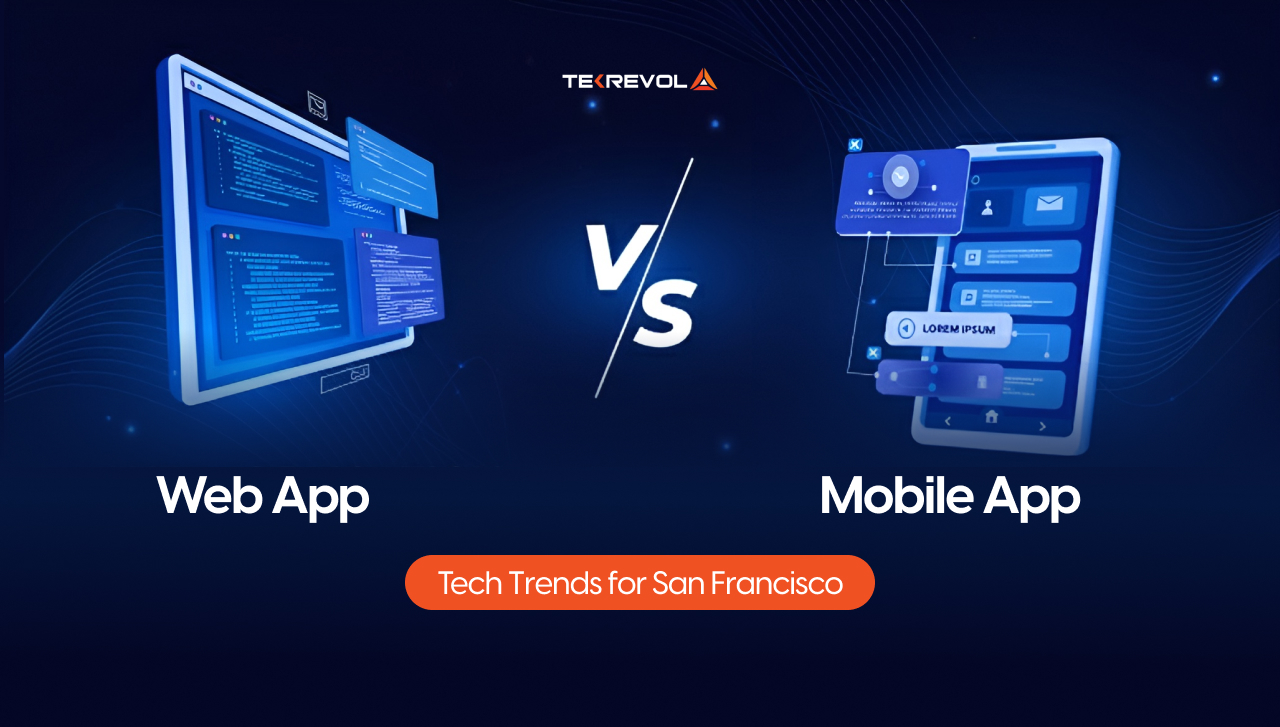
The debate around a web app vs mobile app is no longer haunting an SF startup. Because the Bay Area tech market now demands a strategic web-to-native funnel rather than a single platform choice. Start with a web app for fast SEO discovery and lower initial overhead. Then you should scale to a mobile app for deep AI engagement and biometric security.
Finding the right balance between reach and retention is the hallmark of a successful mobile app development company in San Francisco. Founders now choose a Progressive Web App (PWA) to capture initial search traffic. Then they migrate high-value users into a native environment. This dual approach ensures your startup app strategy 2026 prioritizes low friction for new users while building deep value for returning ones.
This guide weighs the costs of mobile app development in San Francisco against the speed of global web reach. We cover proper web app vs mobile app differences to help you avoid wasting your initial seed funding on the wrong tech stack.
Web App vs Mobile App Comparison for SF Startups
When performing a web app vs mobile app comparison, look beyond simple feature lists and analyze the total cost of ownership over a three-year cycle.
Web apps offer unparalleled reach because they require zero installation, making them ideal for initial market entry and testing. Native mobile apps, built specifically for iOS or Android, offer offline functionality and deep integration with device hardware like biometrics and haptics.
For an SF-based startup, the choice often hinges on whether your product is a “utility” that solves a quick problem or a “habit” that users will interact with multiple times per day.
| Feature | Web App | Native App (iOS &Android) |
| Primary goal | Discovery and broad reach | Retention and deep engagement |
| Typical build cost | $60,000 to $120,000 | $150,000 to $350,000 plus |
| Launch timeline | 4 to 8 weeks | 3 to 6 months |
| Codebase | Single codebase | Separate or cross-platform builds |
| Performance | Good for content and workflows | Best for speed and smooth UX |
| Offline access | Limited | Strong native support |
| Hardware access | Minimal | Full access to GPS camera sensors |
| AI integration | Cloud-based agents | On-device and hybrid AI |
| User acquisition | SEO Reddit links sharing | App Store ASO paid UA |
| Best use cases | B2B SaaS dashboards utilities | Social fintech health logistics |
You must decide if you want the broad accessibility of the web or the deep engagement of a native application. Expert web design companies in the USA can bridge these approaches efficiently. They create strategies where the web is used for initial acquisition and mobile for retention.
Benchmark Your Digital Options
TekRevol advises SF startups on web app vs mobile app plans.
Review Your RoadmapMobile App vs Web Usage Statistics in 2026
Mobile apps dominate daily digital habits, yet the web remains the primary gateway for complex research and initial discovery in San Francisco. Current Reddit mobile app usage vs web usage statistics show a significant divide in how users interact with content based on the platform.
The Reach vs Retention Gap
While the web is essential for discovery, the app is where the engagement happens.
- Time Spent: Global mobile app usage has climbed to an average of 3.5 to 5 hours per day, with apps capturing nearly 90% of total mobile internet time.
- Discovery Power: As per Statista, platforms like Reddit receive 5.9 billion visitors from mobile devices monthly, yet 78% of that traffic is web-driven discovery rather than app-native browsing.
- Conversion Multiplier: Mobile apps achieve a 3.5% conversion rate, significantly outperforming the 2% average seen on mobile web browsers.
- Churn Rates: Mobile apps lose about 53% of users in the first month if onboarding fails. Web apps give more context early, which reduces early drop‑off and helps users stay engaged longer.
Why SF Startups Must Watch the “Session Split”
These trends explain why the responsive web design vs mobile app debates miss the point. It is not about which platform wins overall. It is about when each platform fits the user intent.
While 76% of users prefer a desktop for AI-driven productivity, 49% open an app more than 11 times a day. So, a high app-to-web ratio indicates that your product has become a daily habit (like a transit tracker or a fintech tool). Here mobile app is non-negotiable for retention.
However, if your service is transactional and research-heavy, your initial focus must remain on the web. As per Forbes, a high-performing web presence helps capture the 57% of US traffic that still originates from desktop for high-intent searches.
When a Web App Is the Right Choice in San Francisco
A web app is the best choice when your priority is immediate visibility and broad accessibility across all devices. You can work with a web development company to bypass app store approvals and reach users instantly. In the hyper-fast SF market, launching a web project is the perfect starting point for many B2B and SaaS startups.
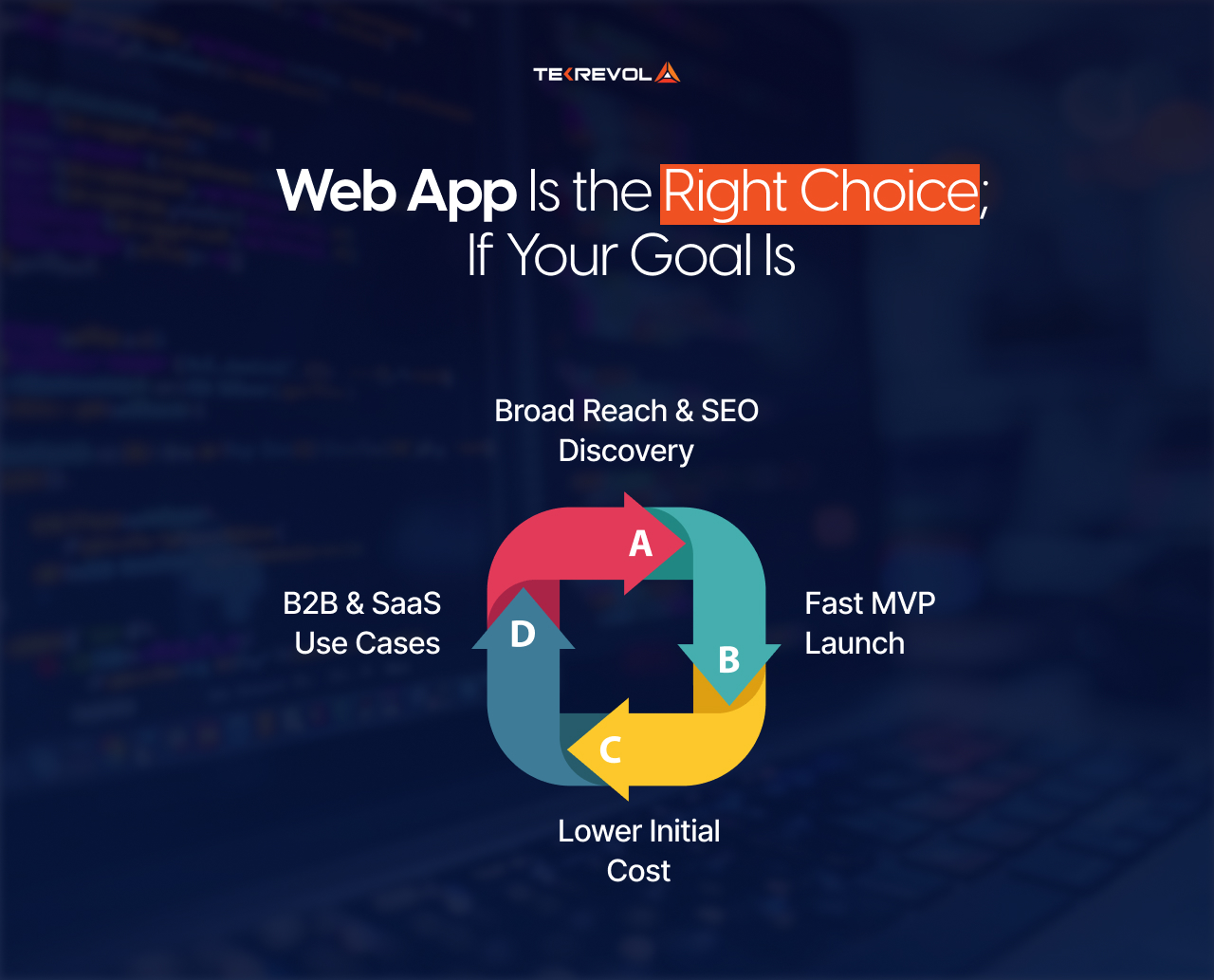
Broad Reach & SEO Discovery
Web apps excel at search-first acquisition and organic growth. Users can find your product on Google, Reddit, or niche forums. You don’t have to convince someone to download an 80MB file; they just click a link from a search result. This zero-installation friction of web app vs mobile app is vital for B2B and content-heavy platforms, where the goal is to be found.
Fast MVP Launch & Lower Initial Cost
Developing a single codebase for the web is significantly cheaper and faster than building separate iOS and Android versions. San Francisco startups often use MVP development services that help them get to market in weeks. This speed is a competitive necessity in a city where venture capital moves fast and waiting months for an app store review can be fatal.
B2B, SaaS & Utility Use Cases
For desk-based workflows and complex admin panels, the browser is still king. If your product involves data-heavy reports or internal employee tools, you can work with expert web portal development services to build high-performance interfaces. This ensures your business clients have the tools they need for their daily workflows.
When a Mobile App Is the Right Choice in San Francisco
A mobile app is the right choice when your business model relies on specialized hardware, or “always-on” AI features. Comparing the cost of cross-platform vs native apps, the latter cost more upfront, but they offer a level of personalization that browsers simply cannot match.
Deep Engagement & Retention
Native mobile apps are the best tools for building daily habits and long-term user loyalty. You can use loyalty mechanics and personalized rewards to keep your users coming back. These apps create a sense of ownership that a website simply cannot provide. High mobile app engagement leads to better long-term growth for consumer startups.
Hardware & Native Capabilities
Native mobile apps offer superior access to device hardware compared to web alternatives. If your product needs precise GPS for ride sharing or the camera for fintech verification, you must go native. Offline access is one of the other benefits of mobile apps for business, like transit and travel.
AI Automation & Personalization
AI and automation are easier to integrate within a native app. On-device neural processing allows for real-time personalization without the latency of the cloud. Your app can act as an agent that anticipates user needs based on their location and behavior. You can hire our AI development services to offer these context-aware experiences.
OS Level Security
Security is another area where native apps shine for SF-based fintech and healthtech firms. You can leverage biometric security like FaceID and TouchID to protect sensitive user data. Comparing web app vs mobile app, the latter offers a higher layer of OS level security. This helps you comply with strict regulations while maintaining a frictionless login process.
The Hybrid Strategy: Web App + Mobile App
A hybrid strategy is the most effective way to grow a tech business today. Use the web to attract new visitors and the app to turn them into power users. This approach combines the low cost of web discovery with the high value of app retention. It is the secret behind many of the most successful startups in the Silicon Valley ecosystem.
Web to App Funnel
A popular 2026 tactic involves the web-to-mobile funnel. Startups attract users via SEO-rich web content and then offer app-exclusive features like faster biometrics to encourage a download. This reduces the cost per acquisition (CPA), as you aren’t paying for “cold” downloads in the crowded App Store.
Cross-Platform Development
To manage costs in a high-rate market like SF, teams are increasingly using cross-platform app development. Frameworks like Flutter and React Native allow you to share logic across iOS and Android devices. This React Native vs Flutter choice depends on your specific UI needs and team skills. You can find Flutter app development services that help you build for both stores simultaneously.
Start Web and Expand to Mobile
Many founders start with a web MVP to validate their core idea before going native. This allows you to gather user feedback and iterate on your product without a huge investment. Once you have a proven model, you can expand to a native app for your most loyal users. Our cross-platform app development services help you manage this transition smoothly.
Scale with Hybrid Approach
TekRevol builds premium, scalable app solutions for tech leaders.
Book Your Free CallLocal Utility Use Cases in San Francisco
San Francisco provides a unique testing ground for digital platforms. Local users expect high-performance tools that solve immediate, physical-world problems like parking or commuting.
Parking & Transit
Services like the SFMTA and Clipper have moved heavily toward mobile-first experiences. While you can check muni schedules via responsive web design on your phone, the actual payment and real-time tracking happen in the app. The Clipper app is a prime example of where native GPS and NFC technology are non-negotiable for a seamless Bay Area commute.
News & Media
Local publishers like The San Francisco Standard use the web for broad reach and social sharing. However, they use dedicated mobile apps to send urgent push notifications about local events or transit delays. This creates a balance where the web handles the “discovery” of an article, while the app handles the “relationship” with the reader.
Local Services & Logistics
From grocery delivery to on-demand dog walking, SF is the capital of service-based apps. These platforms require deep API integration services to handle maps, payments, and real-time chat simultaneously. For these high-utility local services, the speed and reliability of a native app are far superior to a mobile website.
Web App vs Mobile App: Economic & Tech Considerations For San Francisco
The San Francisco market in 2026 is defined by extreme talent competition and the highest developer rates in the country. The economic and technical realities given below explain why SF founders align platform choice with budget, compliance needs, and long-term scalability.
Talent Scarcity and Development Costs
Senior developers in the Bay Area command high salaries that can strain a startup budget. The average rate for a top-tier developer ranges from 180 to 250 dollars per hour. You should seek tips to hire app developers in San Francisco to find the right team for your project.
Compliance and Security
San Francisco startups face strict data rules, especially in fintech and healthtech. CCPA 2.0 raises the bar for consent and data handling. Mobile apps offer stronger OS level security through sandboxing and biometric access. Web apps still need strong encryption, often starting with a thorough web design audit to catch risks early.
AI Automation and Performance Demands
AI now plays a central role in local products. Web apps often rely on cloud-based agents for search and recommendations. On the other hand, mobile apps integrate AI for faster response and better privacy. Our AI-powered app development approach blends both without sacrificing performance.
Customization and Scalability
Generic templates rarely succeed in the SF market. Users expect fast and scalable experiences. Web apps scale well for traffic spikes and experimentation. Mobile apps scale for engagement and reliability. Choosing the right web architecture early saves cost later, especially when planning expansion across platforms.
Responsive Web Design vs Mobile App: The 2026 Convergence
By 2026, the technical gap between website vs web app, and mobile app will have narrowed significantly. Technologies like WebAssembly (Wasm) now allow browsers to run heavy computations with native-parity web features. This convergence is changing how founders think about their initial product launch. It is no longer a simple choice between one or the other but a blend of both.
The Rise of Progressive Web Apps (PWAs)
PWAs offer the discoverability of a website with the “feel” of an app, including home screen icons and push notifications. According to research published by Emergen Research, the global PWA market is projected to reach over $10 billion by 2027, growing at a CAGR of 31.9%.
For many SF startups, a PWA is the “Phase 1” solution because it bypasses the 15-30% “Apple Tax” on digital goods while allowing for instant updates. You can learn more about this at our PWA vs native app comparison page.
Hardware Parity and WebAssembly
New web technologies like WebAssembly (Wasm) allow browsers to run high-performance code at near-native speeds. Complex tasks, like 3D rendering or real-time video editing, which once required a native app, can now run effectively in a Chrome or Safari tab.
However, native apps still hold the crown for background processing and deep integration with wearable tech (like Apple Watch or AR glasses), which are ubiquitous in the Bay Area.
Agentic AI
We are also seeing an agentic shift where apps act as proactive assistants for their users. The web serves as your Discovery Agent to help people find you. The mobile app acts as your Action Agent to help people get things done on the move.
Web App vs Mobile App Differences: 2026 Decision Matrix
You can use this matrix to determine the best starting point for your new product. Each goal has a clear winner among web app vs mobile app based on the current San Francisco tech landscape.
| Business Goal | Recommended Platform | Strategic Priority |
| User Engagement | Native Mobile App | Push Notifications & Biometrics |
| Organic Discovery | Web App (PWA) | Content Marketing & Reach |
| Speed to Market | Web App | MVP Validation |
| Heavy Personalization | Native Mobile App | On-device AI Agents |
| Limited Initial Budget | Web First, Then App | Cost-effective Scaling |
Final Verdict
The battle of web app vs mobile app differences in San Francisco is no longer a winner-take-all scenario. Success in 2026 requires a hybrid strategy. You should start with a web app to dominate organic search and lower your initial development costs.
Once you identify your most engaged users, you should transition them into a native mobile app. This move secures your place on their home screen and enables the advanced AI features they expect.
A leading PWA development company like TekRevol ensures you have the local expertise to scale in the Bay Area. We help you choose the right app platform to build a scalable and secure digital product.
Dominate the SF market
TekRevol builds premium, scalable app solutions for tech leaders.
Get Free Consultation Now




![How Much Does it Cost to Develop a Food Ordering Website? [2026 Analysis]](https://d3r5yd0374231.cloudfront.net/images-tek/uploads/2026/03/Tek-Feature-7-1.jpg)


