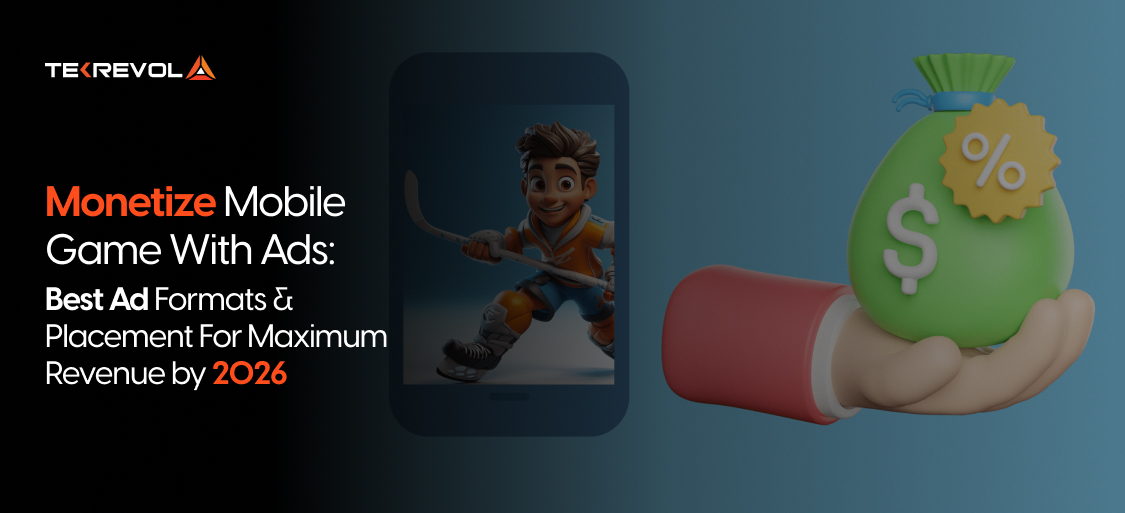
The mobile gaming industry is undergoing a major transformation, and so are the ways through which developers generate their revenue. Free-to-play games will dominate app stores by 2026, with ads taking over as the main source of revenue. The ability to effectively monetize your mobile game with advertisements may be what sets apart a short-term success from a long-term profitability, coming from both casual puzzle and competitive strategy games.
Today’s gamers want to play for free, experience smooth game flows, and receive meaningful rewards. Ads do not have to be mere interruptions anymore; if placed well and designed optimally, they can become a piece of the gaming experience. The material here is about the most efficient ad formats, placement ideas, networks, and next-generation best practices to keep developers’ revenue flowing while ensuring high retention.
Why Ad-Based Monetization Remains the Principal Mobile Gaming Protocol
The advertisement-based model still generates more revenue than any other model because it is more in tune with player behavior and the market demand. Besides delivering zero friction, free-to-play also gives access to a huge number of users, which in turn helps developers earn from each session, instead of relying solely on purchases.
In part, due to the huge surge in casual and hypercasual gaming, mobile game ad revenue is estimated to exceed $140 billion by 2026, according to Statista.
That same publication from Statista estimated that more than 95% of the revenue in mobile gaming came from free-to-play titles, proving a reason why ads are the centerpiece of mobile game development company revenue generation.
In addition, average session counts per user increased year over year, thus providing opportunities for ad exposure without added user acquisition costs.
Before the exploration of ad formats, it is very important to understand how the player’s mindset and engagement directly impact ad performance.
Looking to monetize mobile game with ads effectively?
TekRevol engineers player-friendly games that boost revenue and retention.
Schedule Your Strategy CallComprehend Player Psychology Before Placing Ads
Empathy is the starting point of successful ad monetization. Players are not opposed to ads; they are sensitive to timing, frequency, and relevance. A poorly timed ad can feel frustrating, while a well-placed one feels fair and even helpful.
Players accept ads when there is a good value exchange. This is why reward-based formats outperform forced interruptions. Understanding when players feel relaxed, rewarded, or reflective allows developers to show ads without breaking immersion. This balance of psychology is what sets high-performing games statistics apart from uninstall reports.
The Best Mobile Game Ad Formats in 2026
Ad formats have really matured in the last few years. Rather than depending on one-size-fits-all, top-performing games are using a mix of ad formats tailored to gameplay loops and player intent which can be a real revenue changer for mobile games in 2026 as per global games forum.
Before starting with each format separately, remember that no ad type works in isolation; growth in mobile games revenue actually comes from combining the formats together and optimizing their placements over time.
Rewarded Video Ads
Rewarded video ads are the most player-friendly, profitable format available today. They let users opt in voluntarily in exchange for meaningful in-game benefits, making them ideal for long-term retention.
Key benefits of rewarded ads:
- Higher completion and engagement rates
- Strong player satisfaction because of choices and control
- Industry-leading CPMs in most regions
Rewarded ads work extremely well in casual, puzzle, and mid-core games in terms of revenue generated from mobile gaming. Often, they are applied to revive characters, buy access to premium items, or accelerate progress. When implemented correctly, rewarded ads will feel like bonuses rather than monetization tactics.
Interstitial Advertisements
Interstitial ads are full-screen placements shown between moments of gameplay and result in higher revenue per impression; timing is everything to avoid frustration.
The best practices of interstitial ads include
- Showing them after level completion or failure
- Avoid mid-gameplay interruptions
- Limit the frequency in early sessions
These formats perform well within hyper casual games with short play cycles typically in a 3D game development company which ensures people are sync without getting bore. Interstitials in combination with rewarded ads can balance revenue and user experience.
Banner Ads
Banner formats remain a reliable passive income source, especially for games with longer session times. While they generate lower revenue individually, their continuous visibility adds up over time.
Modern adaptive banners automatically resize for different devices, thus reducing issues with layout. When placed thoughtfully, banners support mobile game monetization without affecting the flow of gameplay. Further, you may also check out best iOS games available in 2025 – 2026.
The ideal places to put banners include:
- Home screens and menus
- Inventory or shop pages
- Noninteractive screens
Playable Ads
Playable ad formats provide an opportunity for users to play a mini version of the advertised game themselves. This is a deeply immersive ad format and very engaging, so playable ad units are among the highest revenue-generating ads for advertisers.
From a game developer’s viewpoint, playable ads are a means to get users more engaged without interrupting the gameplay. The result is particularly good with puzzle, simulation, and casual games where the interaction is indeed a part of the game.
Native and In-Game Ads
Native ads are ads that are so well integrated into the gameplay that players can hardly recognize them as ads. For example, advertising on billboards of racing games or putting branded items in the simulation world can be considered aspects of this type of advertising. In these cases, instead of being an advertisement, these serve as an integral part of the game.
Native ads are expected to have an even bigger share in 2026 as they provide an organic option. Thus, they are not perceived as ads to the players, which is one of the reasons why brand recall goes up, and at the same time, more revenue can be generated.
OfferWalls and Incentivized Ads
Offerwalls are areas where users are given a choice to get rewards through various activities, such as watching videos or completing surveys. While they may not be the right fit for every game, they can definitely thrive in games that are heavy on grinding or resource-driven.
They are to be used sparingly so as not to overwhelm players, but done right, offerwalls can greatly increase lifetime value.
Best Ad Placement Strategies to Get Maximum Revenue
Choosing the right ad format is only half of the equation. Placement is what makes an ad feel organic or interruptive. Timing, context, and player intent all play critical roles.
Before placing any ads, analyze your core gameplay loop. Identify any moments of rest, transition, or reward. These are the windows where ads perform best.
Natural Breakpoints
Natural breaks are when the player expects a break. These are prime opportunities for higher-impact formats such as interstitials.
Typical natural breakpoints include
- Level completion screens
- Game over moments
- Progress summaries
Ads set at these points feel less intrusive, since players are already shifting focus.
Opt In Moments
Opt-in placements allow players to self-select ads, which dramatically increases engagement and satisfaction.
Examples of Opt-in placements include :
- Prompt revival
- Bonus reward buttons
- Time-saving alternatives
These moments align perfectly with rewarded ads mobile game revenue strategies.
Passive Placement Zones
Passive zones are areas where gamers do not actively play the game. Examples include banner and native ad placements.
Examples include
- The main menus
- Settings screens
- Store pages
Passive placements assure regular impressions with minimal disruption to core gameplay.
Ready to boost your mobile game earnings in 2026?
TekRevol builds optimized ad flows that maximize user engagement and revenue.
Start Your Consultation Today!Ad Placement Mistakes that Kill Retention
The best ad formats will fail with poor implementation. So many games struggle not because of the ads themselves, but because of how aggressively they are used.
Common errors to avoid
- Serving ads too early in the user journey
- Interrupting active gameplay
- Ignoring session length and player behavior
- Using the same frequency throughout all the players
Long-term success and positive reviews depend on steering clear of these errors.
Ad Frequency Capping and Revenue Optimisation
Frequency capping controls the number of ads shown to an individual user. This is a critical tool in balancing monetization and retention.
Instead, focus on maximizing value per user rather than solely on impressions. A well-optimized frequency strategy improves engagement and reduces churn.
Effective frequency optimization approaches include
- Session-based ad limits
- Player segment-specific caps
- A/B testing of ad intervals
Smart frequency control is core to how one monetizes a game sustainably.
Choosing the Best Ad Networks for Mobile Games
Choosing the right ad network directly influences fill rates, CPMs, and general revenue. By 2026, most successful developers will be reliant on mediation instead of a sole provider.
Consider your game genre, audience geography, and monetization goals before comparing the networks.
Unity Ads vs. AdMob Mobile
The debate is on between Unity Ads vs AdMob Mobile. The truth is, both platforms excel in different areas.
Unity Ads strengths
- Strong performance in gaming-oriented inventory
- Excellent rewarded ad experience
- Deep integration with the Unity engine
AdMob strengths
- Huge advertiser demand
- High fill rates globally
- Advanced mediation tools
In general, most studios can get the best results if mediations are done through both and not when one is exclusively chosen.
AI-Powered and Privacy-First Ad Monetization in 2026
Developers will have to stop using invasive tracking methods due to stricter privacy laws. The next monetization paradigm will rest on the concepts of contextual and behavioral monetization.
One can precisely time an advertisement using AI systems that track gaming behaviors such as session length and progression. This way, it respects privacy while improving relevance.
The benefits of privacy-first monetization include
- Higher player trust
- Complying with global regulations
- Long-term scalability
This evolution is quickly shaping mobile game advertisement monetization strategies worldwide.
Monetization Strategy by Genre of Game
Not all games monetize the same; understanding genre-specific behavior allows for maximizing results.
Especially because sessions are short, interstitials and rewarded ads play an important role in hypercasual games. Casual puzzle games benefit from opt-in rewards and banners. Strategy and simulation games work best with hybrid models that balance ads with progression-based rewards.
When you tailor your strategy to the genre, it results in ads that contribute to, rather than detract from, engagement.
Ads vs. In-App Purchases and Why Hybrid Models Win
If your main sources of revenue are just advertisements or purchases, then your growth could be limited. Hybrid models offer a great combination of accessibility and premium options, thus enabling you to generate revenue from every segment of the user base.
Advertisements generate revenue from those users who do not pay, while in-app purchases are aimed at the most valuable players. They create a balanced ecosystem together that supports scaling.
This approach is particularly efficient for developers building game apps that reward real money or are built around competition.
Core Metrics for Ad Performance to Track
Measuring success requires more than revenue numbers alone. Monitoring the right metrics provides insight into areas for improvement.
Essential KPIs include
- Effective CPM
- Average revenue per daily active user
- Retention rates
- Session duration
- Ad engagement rate
Monitoring these metrics will keep your mobile game marketing strategy data-driven and agile.
How Smart Ad Monetization Supports Mobile Game Marketing
Ad monetization and promotion are closely connected; in fact, revenue generated from ads often funds user acquisition and growth campaigns.
A strong monetization foundation empowers
- Better mobile game marketing plans
- Scalable User Acquisition
- Sustainable growth cycles
Combined with thoughtful mobile game marketing execution, ads fuel both revenue and visibility.
How Tekrevol Helps You Monetize Mobile Games Smarter
Tekrevol helps studios design monetization systems, prioritizing revenue and player experience. Every decision, from ad format selection down to placement optimization, is backed by data and player psychology.
Our approach involves
- Custom ad monetization strategy
- Network mediation and setup
- A/B testing and performance tracking
- UX focused ad placement
If you are looking to either introduce a new title or expand an existing one, we are here to assist you in effectively and sustainably monetizing your mobile game with advertisements.
Ad-based monetization nowadays is not about increasing the quantity of ads shown but about delivering the correct ad, at the right time, to the suitable player. By 2026, those developers who will dominate the market are the ones who have a deep understanding of the perfect balance, psychology, and technology.
The secret to unlocking a regular income while also retaining the players’ interest is to combine the right formats, enhance your placement, and choose the best ad networks for mobile games. All parties benefit when ads are seamlessly integrated into the experience.
Looking to increase rewarded ads mobile game revenue?
TekRevol helps developers implement opt-in ads that boost player satisfaction and earnings.
Schedule Your Strategy Call