


Great software ideas are everywhere. Successful software products are not.
The difference is rarely effort or ambition. Most of the time, it comes down to validation, or the lack of it. Teams rush into development, invest months of work, and burn serious budgets before answering one simple question:
Can this idea actually work in the real world?
This is exactly where the benefits of proof of concept in software become impossible to ignore. A Proof of Concept (POC) is not a buzzword, a trend, or a “nice-to-have.” It’s a practical, structured way to test feasibility, reduce risk, and make smarter decisions before full-scale development begins.
In this guide, we’ll break down why a software POC matters, how it fits into modern product development, and why skipping it is one of the most expensive mistakes tech teams still make.
What Is a Proof of Concept in Software Development?
A Proof of Concept (POC) is a small, focused experiment designed to verify whether a software idea is technically feasible and worth pursuing.
It answers one critical question:
“Can this be built the way we imagine it?”
A POC does not aim to impress users, scale systems, or polish interfaces. Instead, it focuses on:
- Testing technical assumptions.
- Identifying constraints and limitations.
- Validating core logic or architecture.
- Reducing uncertainty early.
This clear focus is why the benefits of proof of concept in software are so significant, especially for startups and innovation-driven teams.
Atlassian, Lucid, and Coursera consistently define POCs as feasibility checks, not finished products.
Ready to Validate Your Software Idea?
Don’t build on assumptions. A focused Proof of Concept helps you test feasibility, reduce risk, and move forward with confidence.
Talk to Experts.Why Use a Software POC Before Full Development?
Many teams believe skipping a POC saves time. In reality, it often does the opposite.
When you skip validation:
- Hidden technical challenges surface late.
- Architecture decisions become costly to reverse.
- Budgets inflate without real progress.
- Stakeholders lose confidence.
This is exactly why we use a software POC early in the process. It creates clarity before commitment.
The advantages of POC in software development include making informed decisions instead of relying on assumptions. Instead of guessing whether a system can scale, integrate, or perform, you test it in a controlled environment.
This approach aligns with modern software project validation strategies, where evidence replaces opinion.
The Core Benefits of Proof of Concept in Software
Let’s break down the real, practical benefits of proof of concept in software, not theoretical ones, but those teams’ experience on real projects.
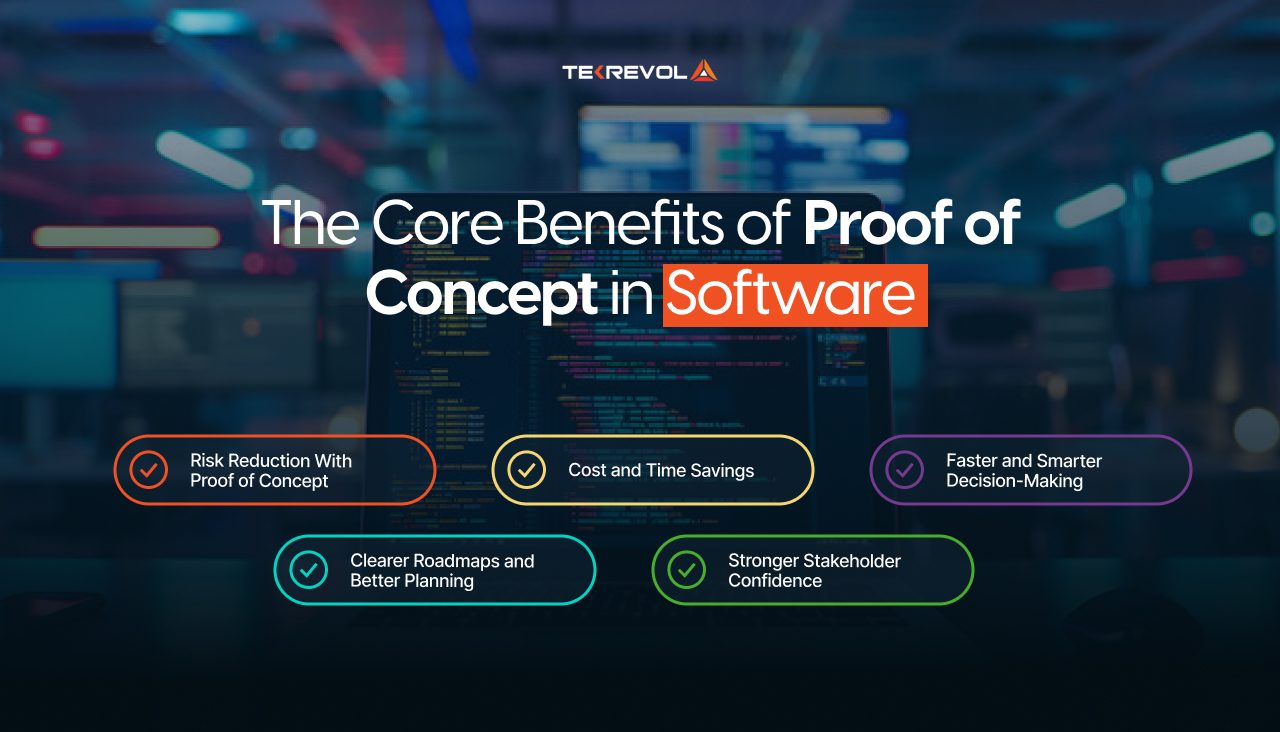
1. Risk Reduction With Proof of Concept
One of the strongest benefits is the risk reduction that comes with proof of concept.
A POC exposes:
- Technical limitations.
- Integration challenges.
- Performance bottlenecks.
- Security concerns.
By identifying these issues early, teams can avoid expensive rework later. According to multiple industry analyses, unresolved technical risks are among the top reasons software projects fail.
2. Cost and Time Savings
Building the wrong thing is far more expensive than building a small test.
A POC allows teams to:
- Validate ideas cheaply.
- Avoid unnecessary features.
- Prevent long-term architectural mistakes.
This makes the proof of concept value in tech projects extremely high. Even a short POC can save months of wasted development.
3. Faster and Smarter Decision-Making
A POC replaces debates with data.
Instead of asking:
- “Will this integration work?”
- “Can this handle our expected load?”
You test it.
This is one of the most practical ways in which POC improves software development; it gives teams evidence-based direction.
4. Clearer Roadmaps and Better Planning
Once feasibility is confirmed, planning becomes easier.
A successful POC:
- Clarifies technical requirements.
- Identifies dependencies.
- Reduces uncertainty in timelines.
This leads to more realistic roadmaps and smoother execution.
5. Stronger Stakeholder Confidence
Stakeholders trust what they can see.
A working POC:
- Builds internal buy-in.
- Helps secure funding.
- Aligns technical and business teams.
This is especially important when explaining complex ideas to non-technical decision-makers.
Proof of Concept Benefits for Startups
For startups, the proof of concept benefits are even more critical.
Startups operate with:
- Limited budgets.
- Small teams.
- High pressure to deliver quickly.
A POC helps startups:
- Validate ideas before fundraising.
- Avoid overbuilding.
- Demonstrate credibility to investors.
This is why proof of concept benefits for startups are often tied directly to survival and scalability.
POC for Validating Software Ideas
Many teams assume market demand alone is enough. It’s not.
A POC focuses on POC for validating software ideas from a technical perspective:
- Can it integrate with the required systems?
- Will performance meet expectations?
- Are there technical blockers?
Market research answers who wants it.
A POC answers whether it can actually work.
Thinking About a POC for Your Product?
Before you invest months of development time, make sure your idea can actually work.
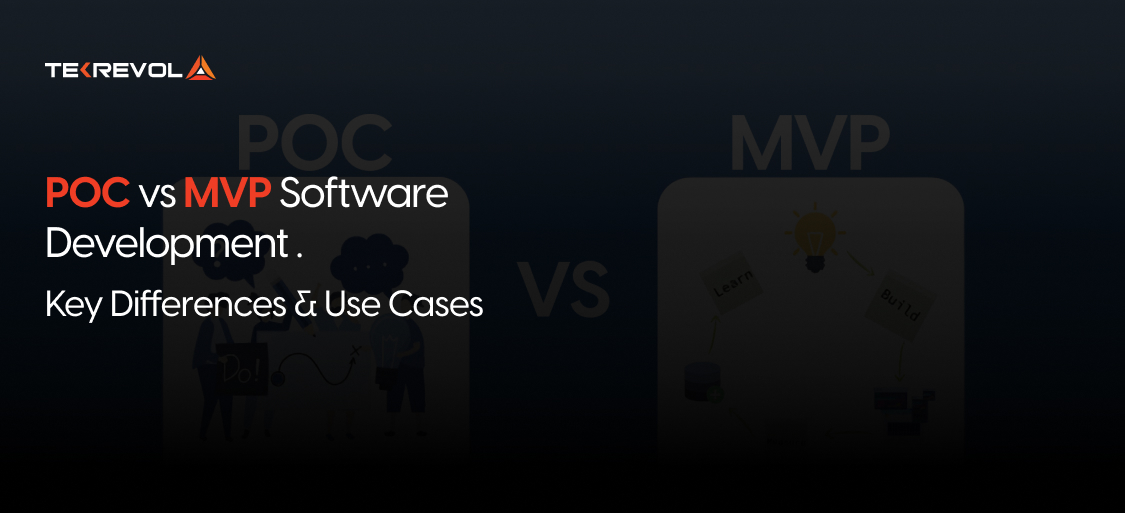
Get a Free Consultation CallPOC vs Prototype vs MVP Benefits (Clearing the Confusion)
One of the biggest misunderstandings in product development is mixing these terms.
| Stage | Primary Purpose | Focus |
| POC | Feasibility | Can it be built? |
| Prototype | Usability | How does it look and feel? |
| MVP | Market Validation | Will users adopt it? |
Understanding POC vs prototype vs MVP benefits prevents teams from testing the wrong thing at the wrong time.
Skipping POC and jumping straight to building an MVP often leads to fragile products built on untested assumptions.
How POC Impacts Product Success Long-Term
The POC impact on product success goes beyond early validation.
A well-executed POC:
- Leads to better architecture.
- Reduces technical debt.
- Improves scalability decisions.
- Increases long-term maintainability.
Products that succeed long-term usually start with strong foundations, and that foundation is often a POC.
When a POC Is Absolutely Necessary?
A POC is especially valuable when:
- Using new or emerging technology.
- Building complex integrations.
- Developing AI-driven solutions.
- Scaling existing systems.
Community discussions on Reddit also highlight this.
What a Software POC Does vs Does Not Do
| A POC Does | A POC Does NOT |
| Validate feasibility | Replace full development |
| Test core functionality | Focus on UI polish |
| Reduce technical risk | Guarantee market success |
| Support go/no-go decisions | Act as a final product |
This clarity is essential for setting the right expectations.
Proof of Concept Value in Tech Projects
Across industries, the proof of concept value in tech projects remains consistent:
- Fewer failed launches.
- Smarter investments.
- Faster execution after validation.
That’s why enterprises and startups alike rely on POCs as a standard practice.
How Tekrevol Approaches Proof of Concept Development
Tekrevol has consistently demonstrated how structured validation leads to real business outcomes.
Their work across AI-powered transformation, product development, and scalable systems shows the practical application of POCs in real-world environments:
- AI from coding to launch.
- Achieving 10x business growth.
- Strategic IT staff augmentation.
- Building successful apps.
Tekrevol’s approach focuses on:
- Technical feasibility.
- Scalability considerations.
- Risk mitigation.
- Evidence-based decision-making.
This makes them a strong partner for organizations that want clarity before commitment.
Why You Need a Software POC
The benefits of proof of concept in software go far beyond early testing.
A POC:
- Reduces risk.
- Saves money.
- Builds confidence.
- Improves product outcomes.
In an industry where failure is expensive and time is limited, a Proof of Concept is not an extra step; it’s a smart one.
If you want to build software that lasts, validate first. Always.
Why Tekrevol Is the Right Partner for Your Software POC?
Tekrevol helps businesses turn ideas into validated software solutions through structured Proof of Concept development. Their team focuses on feasibility, scalability considerations, and real-world constraints, so you get clarity before committing to full-scale builds.
Tekrevol’s POC services include technical feasibility assessment, architecture validation, rapid prototyping, and risk analysis tailored to your business goals. Whether you’re a startup testing a bold idea or an enterprise evaluating a complex system, Tekrevol ensures your software decisions are backed by evidence, not assumptions.
Build With Confidence
A Proof of Concept isn’t an extra step; it’s a smart one. Validate early, reduce risk, and move forward knowing your software idea is built on solid ground.
Need Clarity Before Full-Scale Development?
A software POC can save you time, money, and unnecessary rework.
Schedule a quick consultation now


![How Much Would It Truly Cost to Develop a Food Ordering Website? [2026 Analysis]](https://d3r5yd0374231.cloudfront.net/images-tek/uploads/2026/03/Tek-Feature-7-1.jpg)