
Website Development Cost in UK: Detailed Breakdown

Aqsa K. Profile Image

Aqsa K. Khan

Content Marketing Enthusiast

  • A standard UK business website costs ÂŁ2,000 to ÂŁ10,000, while complex builds reach ÂŁ10,000 to ÂŁ75,000.
  • Web developers in the UK charge a median contract rate of ÂŁ550 a day, per ITJobsWatch data.
  • Running a UK business website costs roughly ÂŁ400 to ÂŁ3,600 a year after launch, excluding paid marketing.
  • HMRC treats your build cost as capital and your update costs as revenue, which changes your tax position.
  • London agencies typically quote 40% to 80% above regional UK studios for identical website scopes.
  • Most UK business websites take 6 to 12 weeks, and slow client feedback is the usual delay.

A website quote is hard to sanity-check because the price depends on decisions most businesses haven’t made yet. Page count, platform, integrations, who writes the copy: each one moves the number by thousands.

Website development costs in the UK range from ÂŁ800 to ÂŁ3,000 for a small business site, ÂŁ3,000 to ÂŁ8,000 for an advanced brochure site, and ÂŁ15,000 to ÂŁ75,000 for a custom platform. Ecommerce sits between ÂŁ2,500 and ÂŁ20,000 depending on catalogue size. A single-page site starts around ÂŁ250.

This guide breaks down the cost of website UK down properly. You’ll get 2026 pricing by website type, by build phase, and by industry. We also break down the monthly and annual running costs most quotes leave out and five questions that let you work out your own number before you speak to a single agency.

How Much Does Website Development Cost in the UK in 2026?

Website development in the UK costs ÂŁ800 to ÂŁ3,000 for a small business site and ÂŁ3,000 to ÂŁ8,000 for an advanced brochure site. Ecommerce runs ÂŁ2,500 to ÂŁ20,000. Custom platforms range from ÂŁ15,000 to ÂŁ75,000, and enterprise builds exceed ÂŁ50,000.

Website Type UK Cost Pages Timeline
Single-page or landing page £250–£800 1 1–2 weeks
Small business website £800–£3,000 5–10 3–5 weeks
Advanced brochure website £3,000–£8,000 10–25 5–9 weeks
Ecommerce website £2,500–£20,000+ Catalogue-driven 8–14 weeks
Custom web platform £15,000–£75,000+ Feature-driven 16–30 weeks
Enterprise website £50,000–£150,000+ Multi-site 24–40 weeks
Monthly maintenance £50–£500+/month n/a Ongoing

Two variables explain almost every gap between quotes:

  • how many build days the work needs
  • who supplies those days

Not sure whether that quote you're holding is fair?

Send us the brief and we'll tell you what it should really cost in the UK market, with no obligation to work with us.

Book Your FREE Consultation →

Factors That Affect the Cost of Website Development in the UK

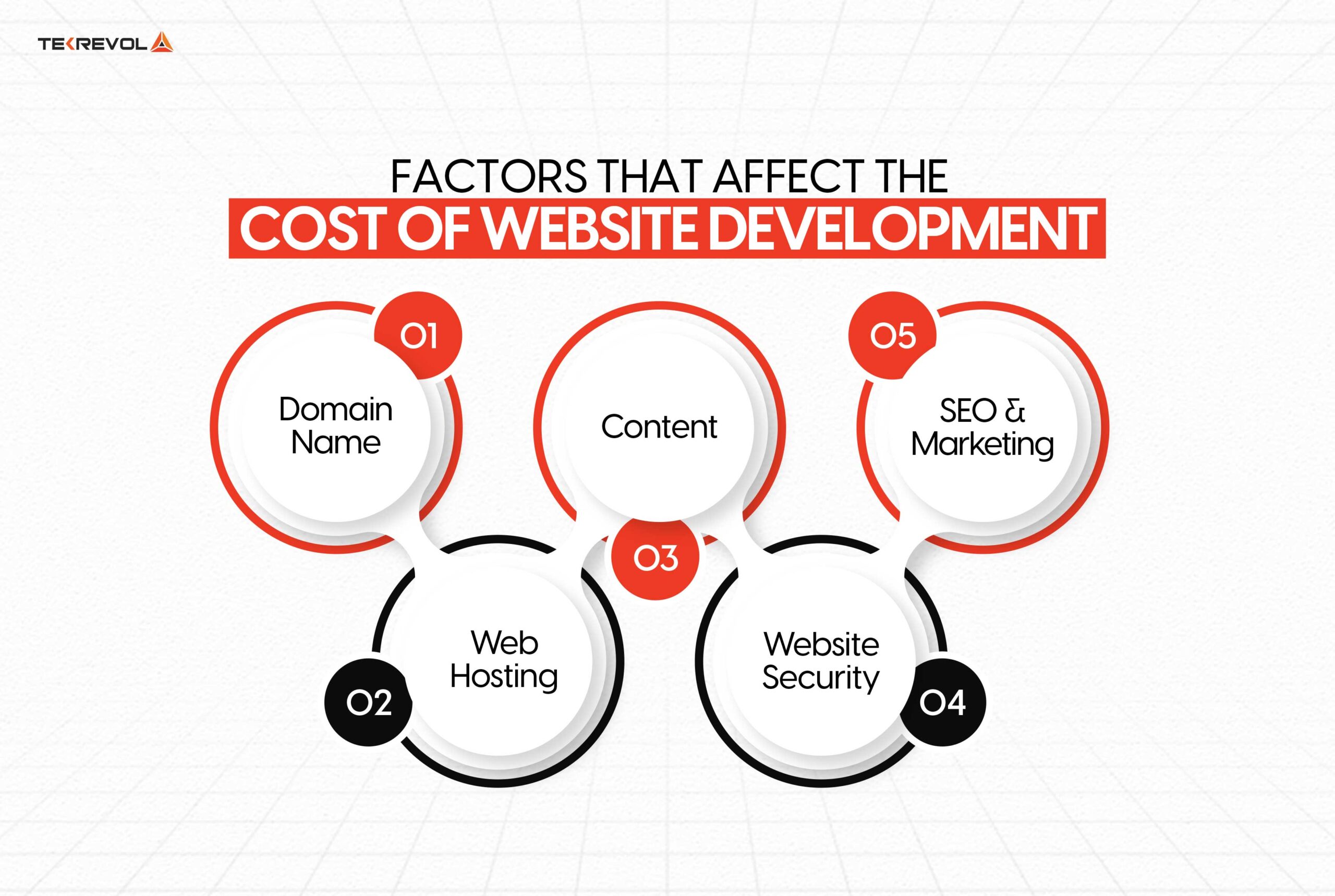
The cost to build a website in the UK is driven by nine variables: design complexity, page count, functionality, CMS choice, hosting, content, SEO setup, security, and integrations. Functionality and integrations move the website UK cost the most, because both add build days rather than pages.

Factors That Affect the Cost of Website Development

Design Complexity and UI/UX

Design complexity sets your starting price. A themed build reuses proven components and costs ÂŁ300 to ÂŁ1,200. A bespoke design system needs custom illustration, motion, a component library, and several feedback rounds, so expect ÂŁ2,000 to ÂŁ8,000 for design alone.

Number of Pages

Page count is the weakest driver of the cost of website UK. The first five pages carry the design system, so they cost the most. Pages six through twenty-five reuse those templates and typically add ÂŁ80 to ÂŁ250 each.

Functionality

Functionality is the real multiplier, because each interactive feature carries its own build, edge cases, and testing.

Features Cost
Contact and quote forms £150–£500
Booking or appointment system £500–£2,500
Member logins and user accounts £1,000–£5,000
Search and filtering £500–£2,000
Calculators and configurators £800–£4,000
Multi-language support £1,000–£4,000
Customer dashboard £3,000–£12,000

CMS Choice

Your CMS decides both the build cost and who can update the site afterwards:

CMS Build Cost Impact Ongoing Cost
WordPress £1,500–£8,000 £20–£80/mo hosting, £150–£800/yr plugins
Shopify £2,000–£15,000 £25–£344/mo subscription
WooCommerce £3,000–£15,000 Hosting plus gateway fees
Webflow £2,500–£10,000 £14–£30/mo per site
BigCommerce £5,000–£25,000 Quote-based
Headless or custom CMS £10,000–£50,000+ £50–£300/mo infrastructure

Domain and Hosting

Domain and hosting are the cheapest line items, but they recur forever. A .co.uk domain costs ÂŁ8 to ÂŁ25 a year. Shared hosting runs ÂŁ5 to ÂŁ20 monthly, while VPS or dedicated hosting runs ÂŁ50 to ÂŁ200 monthly.

Content Creation

Content is the cost most businesses forget to budget for. Professional UK web copy costs ÂŁ200 to ÂŁ500 per page. A half-day commercial photography shoot costs ÂŁ400 to ÂŁ900. Product data entry for ecommerce runs ÂŁ2 to ÂŁ8 per SKU.

SEO and Marketing Setup

Technical SEO setup at build time costs ÂŁ500 to ÂŁ2,500 and covers site structure, metadata, schema, page speed, and indexation. Ongoing SEO is separate, at ÂŁ500 to ÂŁ2,000 monthly, and it belongs in your marketing budget rather than your build cost.

Security

Security scales with what you handle. An SSL certificate fee is about ÂŁ100 a year. Firewall, malware scanning, and managed backups add ÂŁ10 to ÂŁ60 monthly. Sites taking payments or personal data need penetration testing, at ÂŁ2,000 to ÂŁ8,000.

Integrations and Plugins

Integrations cost more than most quotes suggest, because connecting two systems means mapping data both ways and handling every failure state. Budget ÂŁ300 to ÂŁ2,000 per integration for a CRM, ERP, payment gateway, or stock system.

Expert Insight from TekRevol

When we engineered the quoting platform for Rehkemper & Son, a truss manufacturer operating four plants across Illinois, Missouri, and Tennessee, the freight engine alone calculated $3.50 per mile across all four sites. That single piece of logic carried more build effort than an entire ten-page brochure site. Page count predicted nothing here, whereas the custom web application requirements predicted everything.

Website Design Cost in the UK by Type

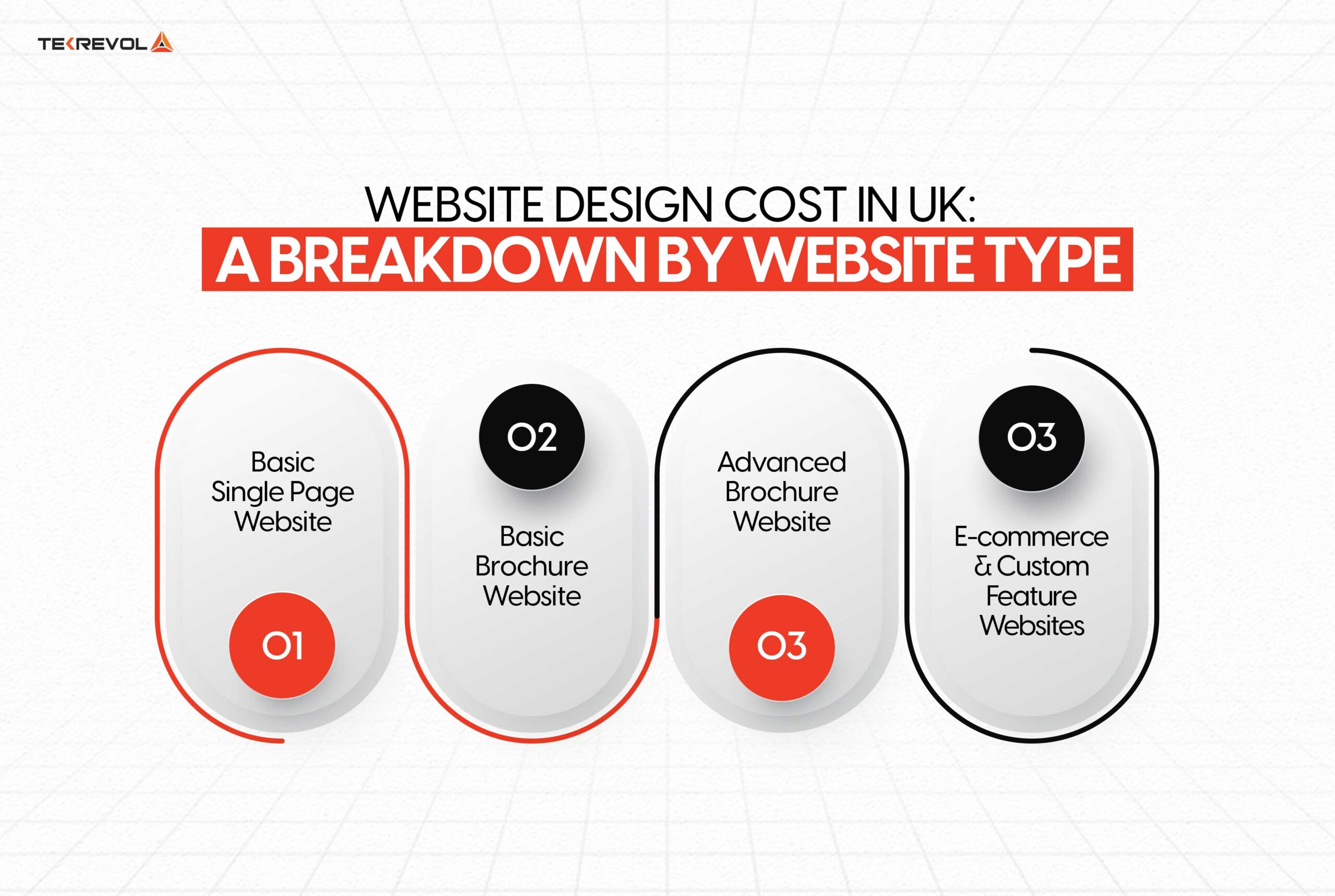
Website costs in the UK split into six tiers. Single-page sites cost ÂŁ250 to ÂŁ800, small business sites ÂŁ800 to ÂŁ3,000, brochure sites ÂŁ3,000 to ÂŁ8,000, ecommerce ÂŁ2,500 to ÂŁ20,000, custom platforms ÂŁ15,000 to ÂŁ75,000, and enterprise builds ÂŁ50,000 upwards.

Single-page Website

A single-page website costs ÂŁ250 to ÂŁ800 in the UK. You get one scrolling page with sections for services, proof, and contact. It suits validating an offer, promoting a single service line, or running a campaign landing page.

Small Business Website (5–10 pages)

A small business website costs ÂŁ800 to ÂŁ3,000. That covers home, about, services, contact, and a blog on a CMS you can update yourself, with mobile optimisation and basic SEO setup included. Most UK trades and local services sit in this tier.

Advanced Brochure Website (10–25 pages)

An advanced brochure website costs ÂŁ3,000 to ÂŁ8,000. The step up buys custom design rather than a theme, plus service-level landing pages, case study templates, lead capture, and stronger technical SEO. Professional services firms usually need this level.

Ecommerce Website

An ecommerce website costs ÂŁ2,500 to ÂŁ20,000 or more, driven by catalogue size rather than page count.

Store Sixe UK Cost What’s Included
Under 50 products £2,500–£6,000 Themed store, standard checkout
50–500 products £6,000–£15,000 Custom design, filtering, promotions
500+ products or multi-currency £15,000–£40,000 Custom catalogue logic, integrations
Marketplace or multi-vendor £30,000–£75,000+ Vendor onboarding, split payments

Payment processing is a permanent cost line rather than a build cost. Stripe’s published UK rates are 1.5% + 20p on standard UK cards, 2.5% + 20p on EU cards and 3.15% + 20p on international cards, plus another 2% where currency conversion applies.

Expert Insight from TekRevol

For Al Hussaini Trading, a retailer of watches, jewellery and leather goods with over 40 physical outlets, the storefront was the simple part. Syncing those outlets to the digital channel meant building middleware between their existing PHP and MySQL systems and BigCommerce, so stock, pricing and orders stayed accurate both ways. That work drove a 110% increase in leads and consumed most of the budget. If you hold physical stock, your ecommerce website development cost is mostly integration cost.

Custom Web Platform

A custom web development costs ÂŁ15,000 to ÂŁ75,000. You’re paying for business logic rather than pages: portals, dashboards, quoting engines, role-based access, and third-party integrations. Timelines run 16 to 30 weeks.

Enterprise Website

An enterprise website costs ÂŁ50,000 to ÂŁ150,000 or more. Cost here comes from scale and governance, including multi-site or multi-region setups, accessibility audits, security reviews, single sign-on, and documented data handling.

Not sure which tier your project actually sits in?

Tell us what the site needs to do and we'll place it in the right tier, with the cost of moving up or down a level.

Get A Quote! →

How Much Does Website Making Cost in the UK?

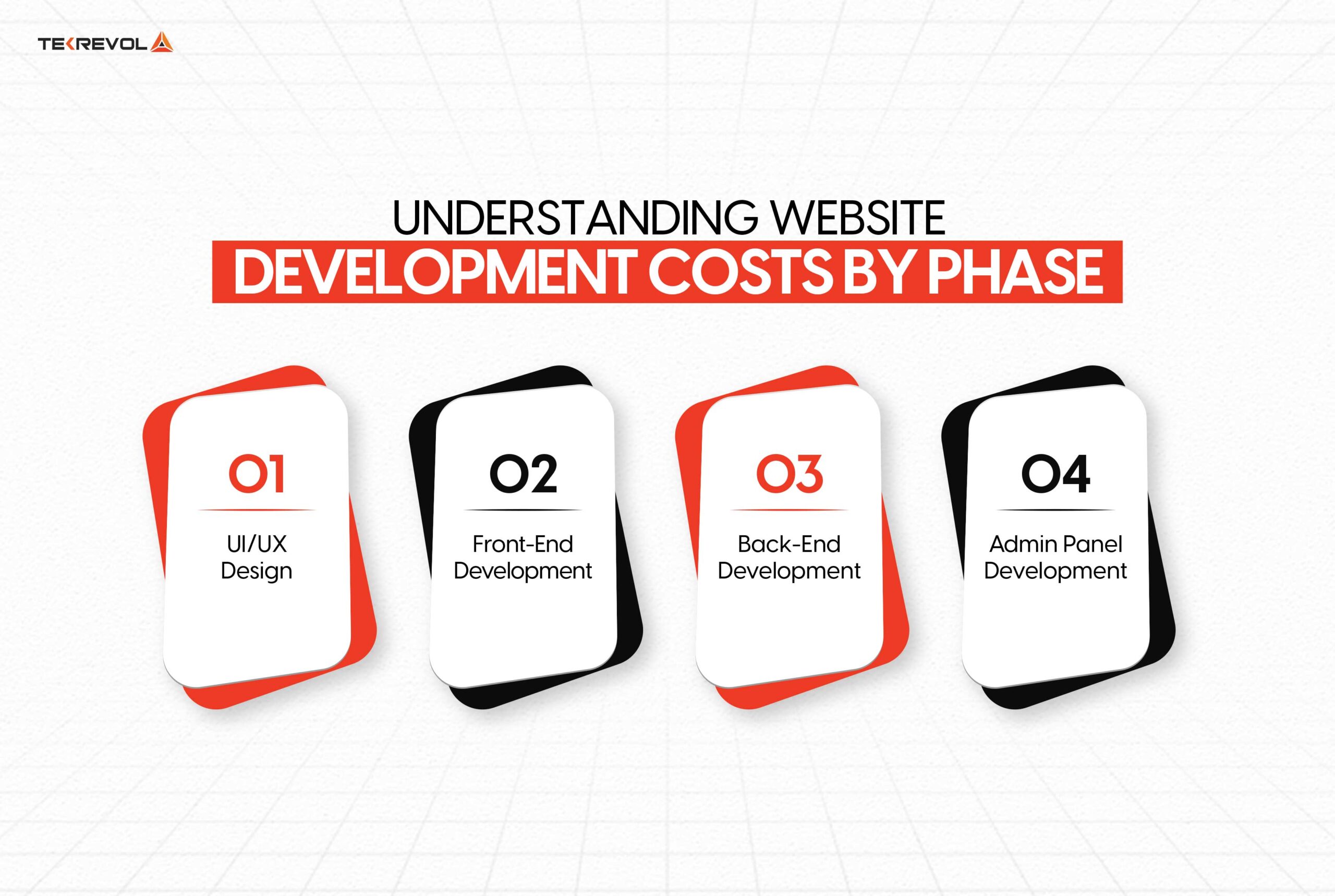
Web design costs in the UK account for 20% to 30% of total project spend. On a ÂŁ6,000 build, design work runs ÂŁ1,200 to ÂŁ1,800. Front-end development, back-end development, CMS setup, testing, and launch absorb the rest.

Understanding Website Development Costs by Phase

Phase Share of budget On a ÂŁ6,000 build
UI/UX design 20%–30% £1,200–£1,800
Front-end development 25%–35% £1,500–£2,100
Back-end development 20%–30% £1,200–£1,800
CMS setup 10% ÂŁ600
Testing and QA 10% ÂŁ600
Launch and Optimisation 5% ÂŁ300

UI/UX Design

UI/UX design costs ÂŁ600 to ÂŁ8,000 depending on originality. It covers research, sitemap, wireframes, visual direction, page layouts and a clickable prototype. Standalone design engagements, where you already have a developer, run ÂŁ1,200 to ÂŁ6,000.

Front-end Development

Front-end development costs ÂŁ800 to ÂŁ10,000 and takes the largest single share of most builds. It converts approved designs into working pages, handles responsive behaviour across devices, and delivers the speed scores that affect both rankings and conversion.

Back-end Development

Back-end development costs ÂŁ1,200 to ÂŁ10,000 for standard sites and considerably more for platforms. It covers databases, server logic, user authentication, form handling, and every API connection the site depends on.

CMS Setup

CMS setup costs roughly 10% of the budget, or ÂŁ300 to ÂŁ1,500 on most builds. It covers installing and configuring the CMS, building editable content templates, setting user permissions, and training your team to publish without a developer.

Testing and QA

Testing and QA costs around 10% of the budget. It covers cross-browser checks, device testing, form and payment testing, accessibility checks, and performance verification. Quotes that skip this line are usually the cheap ones, and the rework costs more later.

Launch and optimisation

Launch and optimisation costs about 5% of budget. It covers DNS and hosting migration, redirect mapping, analytics and Search Console setup, sitemap submission, and post-launch fixes. Our web development team prices these phases separately so you can see where the money goes.

Website Development Cost in UK by Industry

Website development costs by industry in the UK range from ÂŁ1,000 for trades to ÂŁ75,000 for regulated finance. Compliance obligations, integration requirements, and content volume explain the spread rather than design quality.

Trades and Local Services

Trades websites cost ÂŁ1,000 to ÂŁ3,000. The budget goes into credibility, local SEO, service-area pages, and quote forms. Ranking in local search matters far more here than visual sophistication does.

Hospitality and Restaurants

Hospitality websites cost ÂŁ2,000 to ÂŁ6,000. Menus, table booking integration, gallery imagery and mobile speed drive the cost, since most traffic arrives on a phone with intent to book.

Professional Services

Professional services websites cost ÂŁ4,000 to ÂŁ12,000. Legal and accounting firms need content depth, team credential pages, compliance-safe copy and strong lead capture across multiple service lines.

Retail and E-commerce

Retail websites cost ÂŁ6,000 to ÂŁ30,000. Catalogue size, payment setup, stock synchronisation and returns handling set the price. Businesses with physical outlets pay the most for integration.

Healthcare and Clinics

Healthcare websites cost ÂŁ6,000 to ÂŁ20,000. Accessibility compliance, appointment booking, secure handling of patient enquiries and clear regulatory content all add build days.

Property and Lettings

Property websites cost ÂŁ8,000 to ÂŁ25,000. Portal feeds from Rightmove or Zoopla, map search, saved listings and valuation tools each require integration work plus ongoing maintenance.

Fintech and Regulated Finance

Fintech websites cost ÂŁ20,000 to ÂŁ75,000 or more. Spend goes into security architecture, audit trails, compliance review, and documented data handling rather than design. Our custom software development projects in this sector typically allocate 15% to 25% of the budget to compliance alone.

Education and Training

Education websites cost ÂŁ10,000 to ÂŁ35,000. Course catalogues, student logins, payment handling and progress tracking turn a website into a platform, which is where the cost sits.

Manufacturing and B2B

Manufacturing websites cost ÂŁ8,000 to ÂŁ45,000. Product configurators, technical specification libraries, distributor portals and ERP integration account for most of the build.

Work in a regulated or integration-heavy sector?

We'll map your compliance and integration requirements before quoting, so nothing lands as a surprise cost in month three.

Talk To Our Experts →

Choosing Between a Freelancer and a Digital Agency for Website Development in UK

UK freelancers charge ÂŁ250 to ÂŁ600 a day, UK agencies charge ÂŁ600 to ÂŁ1,500 a day, and offshore teams charge ÂŁ15 to ÂŁ40 an hour. Freelancers suit brochure sites, agencies suit integrated builds, and outsourcing suits well-specified scope.

Provider Rate Typical project Best for Main risk
UK freelancer £30–£80/hr, £250–£600/day £800–£5,000 Brochure and small CMS sites Single point of failure, patchy aftercare
UK agency £75–£200/hr, £600–£1,500/day £5,000–£50,000 Ecommerce, integrations, compliance Higher overhead, slower process
Offshore or outsourced £15–£40/hr £2,000–£40,000 Clearly specified scope, larger builds Needs tight specs and a UK-hours contact
DIY builder £12–£40/mo £150–£500/yr Validating an idea Your time, plus a growth ceiling

Freelancers

UK freelancers cost ÂŁ250 to ÂŁ600 a day and deliver most brochure sites for ÂŁ800 to ÂŁ5,000. You get direct access to the person building your site. You also get no cover during holidays or illness, and design, development, and copywriting rarely sit with one person.

Pros

  • Affordability: Freelancers may be less expensive than agencies, which can be beneficial if you are looking to save costs.
  • Flexibility: They frequently have a more flexible work schedule and work style, which can be easily altered to match your specific needs.
  • Direct Communication: Communicating with the person who is directly working on your project may be easier and will undoubtedly result in better personalised service.

Cons

  • Limited Skills: Unlike an agency, a freelancer is unlikely to have a multi-utility staff capable of providing a wide range of services.
  • Longer turnaround times: Freelancers work on multiple tasks at the same time, so their turnaround times can be lengthy.
  • Communication Issues: Working with a freelancer can be difficult at times, especially if the freelancer has a large number of clients, which may cause him or her to be unavailable and inconsistent.

Website Development Agency in UK

A reputable web development company in UK charges ÂŁ600 to ÂŁ1,500 a day because the rate covers a team: designer, developer, QA tester, and project manager. That structure is what integrated builds, compliance work, and multi-stakeholder projects need. Below roughly ÂŁ5,000 of scope, though, the overhead rarely pays for itself.

Pros:

  • Team Expertise: Each agency puts together a team of specialists, including designers, developers, and SEO experts, as well as project managers, to provide specialisation and overall professionalism.
  • Quality Service: An agency may bring together a group of professionals with a variety of expertise, resulting in professional-looking, cohesive work with minimal effort.
  • Comprehensive Support: Some organisations offer supplementary and additional services such as SEO optimisation, ongoing maintenance, and promotion for websites created by them.

Cons:

  • Higher costs: Due to the diversity of services and experience, the price is likely to be greater than that of a freelancer.
  • Less Personalisation: You may not receive as much personalised attention as you would from a freelancer, and messages may be relayed through others.

Outsourcing Website Design

Offshore teams cost ÂŁ15 to ÂŁ40 an hour, which is how a larger scope becomes affordable. It works when your specification is genuinely detailed, and you have a named contact in UK hours. It fails when scope is vague, because clarification cycles eat the savings.

Pros:

  • Cost Savings: You may be able to take advantage of much lower pricing than if you hired local specialists or organisations.

Cons:

  • Communication Barriers: Notably, language and time differences can have a significant impact on engagement, potentially leading to misinterpretation or delayed responses.
  • Quality Control: When working with teams from different time zones, it might be difficult to monitor work quality and track expectations.
  • Hidden Costs: Additional charges may arise as a result of having to spend additional time proofreading or editing to ensure that the finished product meets your expectations.

Website Development Cost in London Versus the Rest of the UK

Hiring a web development company in London costs 40% to 80% more than the same work in regional UK cities. A brochure site quoted at ÂŁ3,000 in Leeds typically runs ÂŁ4,500 to ÂŁ5,400 in central London. Scope stays identical, and only overheads change.

Region Small business site Brochure site Ecommerce Hourly rate
Central London £2,000–£5,000 £5,500–£14,000 £10,000–£40,000 £95–£200
Manchester, Birmingham, Bristol £1,200–£3,000 £3,500–£9,000 £6,000–£22,000 £60–£110
Leeds, Glasgow, Newcastle £1,000–£2,500 £3,000–£7,500 £5,000–£18,000 £50–£90
Wales, Northern Ireland £800–£2,200 £2,500–£6,500 £4,500–£15,000 £45–£80
Distributed or hybrid teams £1,000–£3,000 £3,000–£8,000 £5,000–£20,000 £45–£100

A London premium is worth paying for proximity or genuine sector expertise. It isn’t worth paying for identical work delivered remotely, so ask what the difference covers before you accept it.

How Much Does a Website Redesign Cost in the UK?

Website redesigns in the UK cost ÂŁ1,500 to ÂŁ4,000 for a visual refresh and ÂŁ4,000 to ÂŁ12,000 for a full redesign. Adding a platform migration pushes it to ÂŁ8,000 to ÂŁ25,000. Budget separately for redirects and ranking protection.

Redesign scope UK cost What’s involved
Visual refresh £1,500–£4,000 New styling on existing structure and CMS
Full redesign, same platform £4,000–£12,000 New design system, rebuilt templates, content migration
Redesign plus replatform £8,000–£25,000 New CMS, data migration, redirect mapping
Redesign plus new features £12,000–£40,000 All of the above, plus feature builds

SEO preservation is the line people forget. If your current site ranks at all, you need a redirect map, a URL audit, and a technical check before launch, at ÂŁ800 to ÂŁ2,500.

Expert Insight from TekRevol
Select Dealer Service came to us with a working but dated site serving the automotive dealer network. We rebuilt it as a platform for their 25,000 users, focused on navigation and the workflows dealers used daily. The result was a 150% increase in conversions, which came from restructuring how the site worked rather than from new visuals. The full Select Dealer case study has the details.

Site looks fine but generates nothing?

We'll audit your current site and tell you whether a refresh, a rebuild or a replatform is the right spend for your goals.

Book A Free Consultation Now! →

Should you Choose Fixed-price or Time-and-materials for a UK Website?

Choose fixed-price when your scope is settled, and time-and-materials when it isn’t. Fixed-price UK website quotes carry a 15% to 30% risk premium. Time-and-materials costs less on paper but needs active management from you.

Fixed price feels safer, and frequently it is. Sometimes, though, it simply moves the risk somewhere far less visible.

Model How it prices Works well when Watch out for
Fixed price Whole scope, one number Scope is documented and stable Change requests priced at a premium
Time and materials Day rate against actual work Scope will evolve, or discovery is needed Budget drift without weekly reporting
Phased fixed price Fixed price per stage Larger builds, staged funding Needs a clear stage-gate agreement
Retainer Monthly capacity Ongoing improvement after launch Paying for capacity you don’t use

Most of our UK clients settle on phased fixed price, and there’s a reason. You fix the price for discovery and design, see real deliverables, then fix the build price against a scope that actually exists rather than an educated guess.

Whichever model you select, insist on three things in writing:

  • a defined scope document
  • a named change-request process with rates attached, and
  • a clear line on who owns the code and accounts at the end

Hidden Website Costs UK Businesses Budget for

Hidden UK website costs include VAT, accessibility compliance, business email, premium plugins, photography, copywriting, content migration and training. Together, these add 15% to 30% on top of the quoted build price.

Hidden cost UK price Why it gets missed
VAT 20% of the quote Most agencies quote excluding VAT
Accessibility audit £2,000–£6,000 Equality Act 2010 duties, WCAG 2.2 AA benchmark
Business email £5–£15/user/mo Separate from hosting
Premium plugins and licences £150–£800/yr Renews annually, not once
Photography £400–£900/half day Stock rarely fits a real brand
Copywriting £200–£500/page Assumed to be included
Content migration £500–£3,000 Moving existing posts is real work
CMS training £300–£600 Skipped, then paid for in support tickets

On a ÂŁ6,000 build, these typically bring the real figure to ÂŁ7,500 to ÂŁ9,000.

How Do You Know If a Website Quote Is Fair?

A fair UK website quote shows scope, deliverables, timeline, revision limits, hosting arrangements and code ownership in writing. Divide the price by ÂŁ550 to see the person-days you’re buying. Then check the effort matches the brief.

Use this as a checklist before you sign anything.

Green flags worth looking for:

  • A written scope document listing pages, features, and integrations line by line
  • A stated number of revision rounds, with the cost of extra rounds named
  • Clear code and account ownership transferring to you at launch
  • A defined post-launch support window, usually 30 to 90 days
  • Named team members rather than “our team of experts”
  • A change-request process with day rates attached

Red flags worth walking away from:

  • A single lump-sum price with no scope breakdown
  • Refusal to hand over CMS admin access or hosting credentials
  • “Unlimited revisions,” which never survives contact with reality
  • A quote that arrives within an hour of a complex brief
  • Monthly plans where you never own the site, with no exit path
  • Pricing that implies fewer person-days than the brief plausibly needs

That last point is the day-count test again, and it’s the single most useful thing on this page despite taking about two minutes. If you’d rather compare UK providers first, our roundup of top web development companies in the UK gives you a starting shortlist.

Partner With TekRevol for Website Development

At TekRevol, we specialize in transforming ideas into fully functional websites tailored to your business needs. We understand that every business is unique, and we take the time to craft solutions that align with your goals and budget. From initial design to final deployment, we ensure your website not only looks great but also performs seamlessly.

We quote scope before price. You get a written breakdown of pages, features, and integrations, with a web development cost in UK against each line, so you can see what drives your total and remove what you don’t need. The build is then phased so spend matches your budget cycle.

From brochure and content-led sites on WordPress, Drupal, or Webflow to stores on Shopify, WooCommerce, or BigCommerce, we build every tier. Where the value sits in the back end, we build platforms instead of pages. The Rehkemper quoting engine and the Al Hussaini omnichannel integration are both examples.

Post-launch work is scoped upfront rather than added later, because maintenance, performance work, and iteration are where a website earns back what it cost.

Need a Reliable Web Development Partner to Help Grow Your Business?

TekRevol can help you build the website you’ve always envisioned.

Book A Free Consultation Now! →

Summerize with AI

  • AI
  • AI
  • AI
  • AI
  • AI

Get In Touch

    Summarize with AI

    Get In Touch

      Frequently Asked Questions:

      A 10-page website in the UK typically costs ÂŁ2,500 to ÂŁ6,000 with a professional freelancer or small studio, rising to ÂŁ6,000 to ÂŁ12,000 from a full agency where custom design, copywriting and SEO setup are included. Pages beyond the first five cost far less individually, because they reuse templates and components you’ve already paid to develop.

      The cost of designing a new WordPress website in UK varies depending on the kind of project and the features one wants to incorporate in the site ranging from ÂŁ1,500 to ÂŁ165,000.

      Building a website takes 3 to 6 weeks for a brochure site and 6 to 12 weeks for a standard UK business site. Ecommerce stores need 8 to 14 weeks, whereas custom platforms and portals take 16 to 30 weeks. Content readiness remains the single biggest factor determining whether any project hits its launch date.

      A website costs ÂŁ400 to ÂŁ3,600 per year in the UK to run after launch. Basic sites occupy the lower end, covering hosting, domain renewal and business email. Business sites land around ÂŁ1,200 to ÂŁ4,000 annually once maintenance and security monitoring are included, while ecommerce stores reach ÂŁ2,300 to ÂŁ8,100 yearly before payment processing fees are counted.

      The average cost of website design for a small business in the UK is ÂŁ2,000 to ÂŁ6,000 in 2026. That covers a 5 to 15 page site with custom design, a CMS, mobile optimisation and basic SEO setup. Freelancers quote ÂŁ1,000 to ÂŁ3,000 for similar scope, though usually with much less strategy, copywriting and testing included.

      Aqsa K. Profile Image

      About author

      Aqsa Khan is a Senior Content Marketer at TekRevol with 5+ years of experience in content strategy, SEO, and lead generation. She specializes in creating data-driven content that drives organic growth and attracts high-quality leads. With deep expertise in the tech industry, she has a natural talent for turning complex ideas into content that connects, engages, and gets results.

      Rate this Article

      0 rating, average : 0.0 out of 5

      Let's Connect With Our Experts

      Get valuable consultation form our professionals to discuss your projects. We are here to help you with all of your queries.

      Revolutionize Your Business

      Collaborate with us and become a trendsetter through our innovative approach.

      5.0
      Goodfirms
      4.8
      Rightfirms
      4.8
      Clutch

      Get in Touch Now!

      By submitting this form, you agree to our Privacy Policy

      Unlock Tech Success: Join the TekRevol Newsletter

      Discover the secrets to staying ahead in the tech industry with our monthly newsletter. Don't miss out on expert tips, insightful articles, and game-changing trends. Subscribe today!


        X

        Do you like what you read?

        Get the Latest Updates

        Share Your Feedback